
Sidestreet Travel strives to showcase a slower, more immersive way to travel. The goal is to provide tips and recommendations that showcase the best local offerings of a place with local, independent, and unique experiences at the core. Travel is an exceptional opportunity to explore, learn, and expand your perspective.
-
Jiufen – A Mesmerizing Mountain Labyrinth
A town set high up in the mountains, in the northeast of Taiwan, Jiufen has a folkloric reputation. The winding road up provides incredible viewpoints of the surrounding lush tropical forests, with temples and houses nestled deep within them, with only the tops of their roofs poking through the canopy. If you’re lucky, you can see down to the ocean below. A breath-taking view of mountain, forest, and sea.
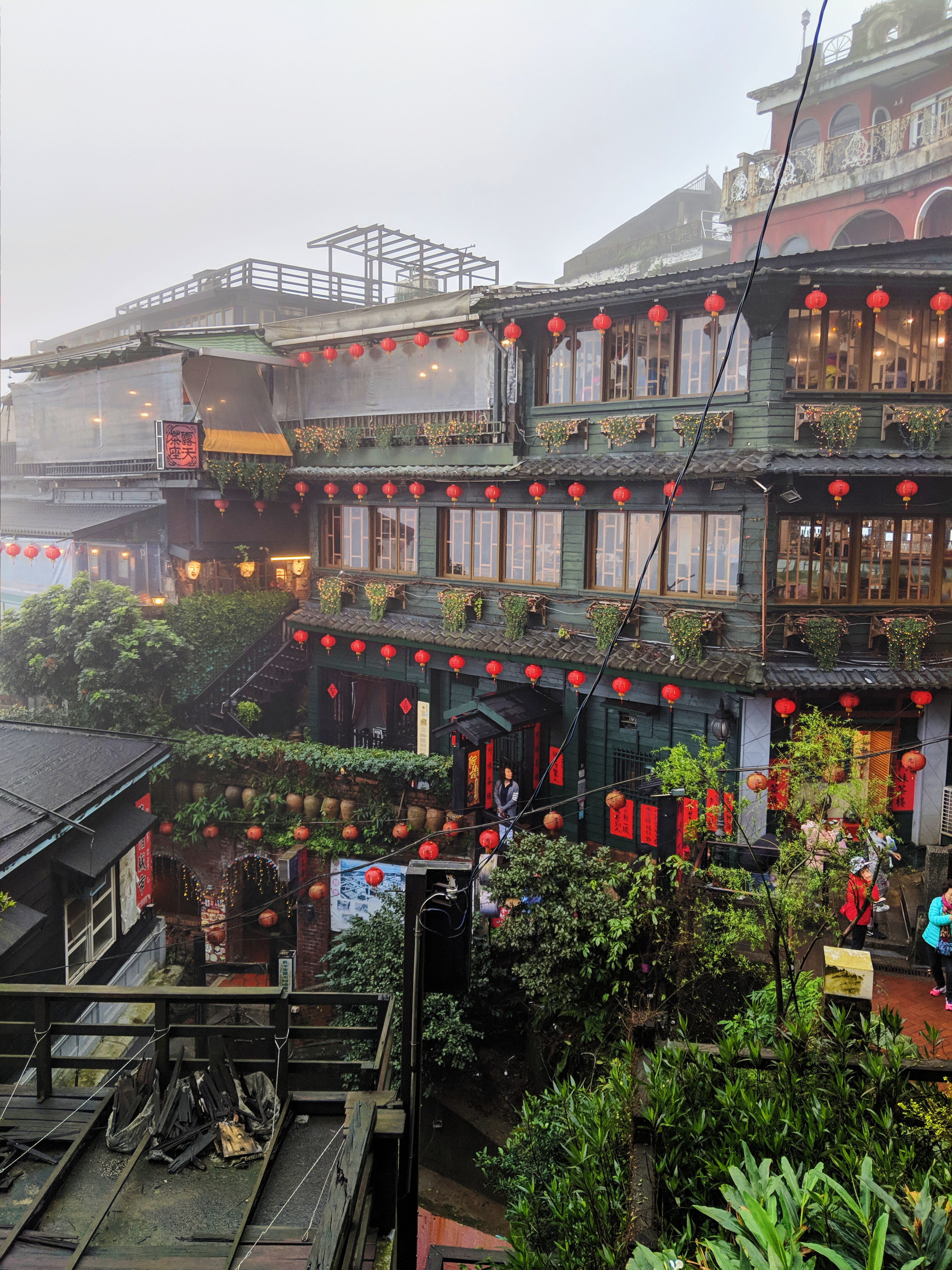
When we were there, the fog was dense and unrelenting. The view was blocked out, with only tiny glimpses of the surrounding environment. It also made the bus ride up a bit daunting as the view in front of the bus was mere feet. Once off the bus, the fog swirled and thickened by the minute. I was able to get a few photos, but then the very thing I took a picture of was swallowed up by the fog.
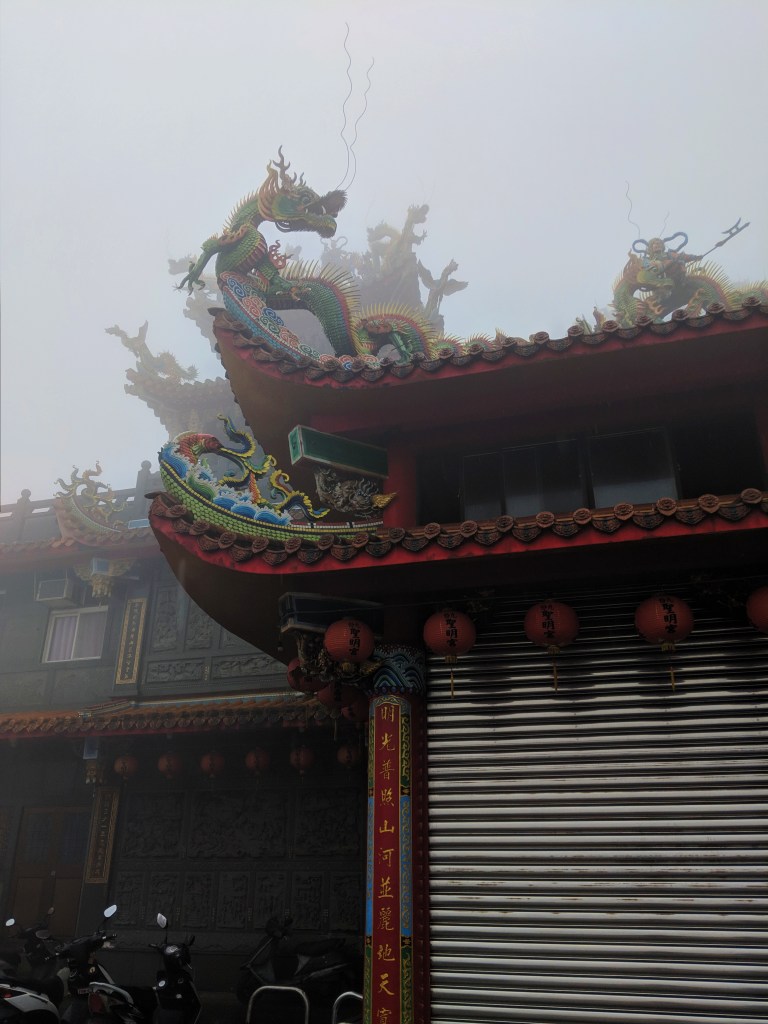
Fog Over a Temple 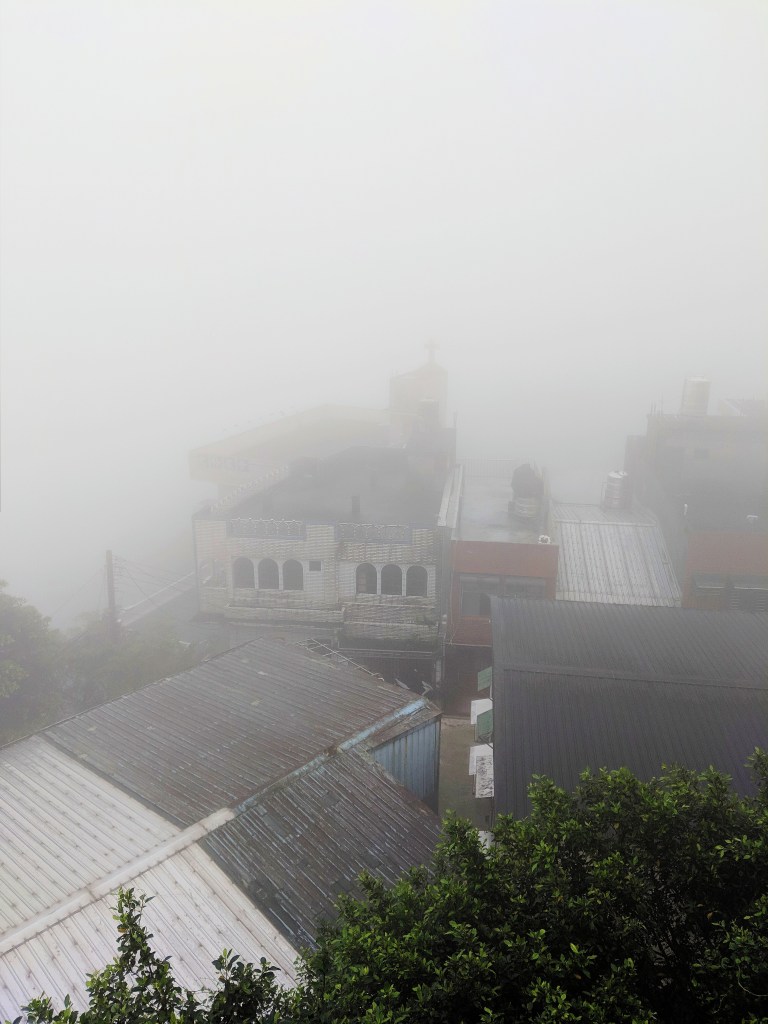
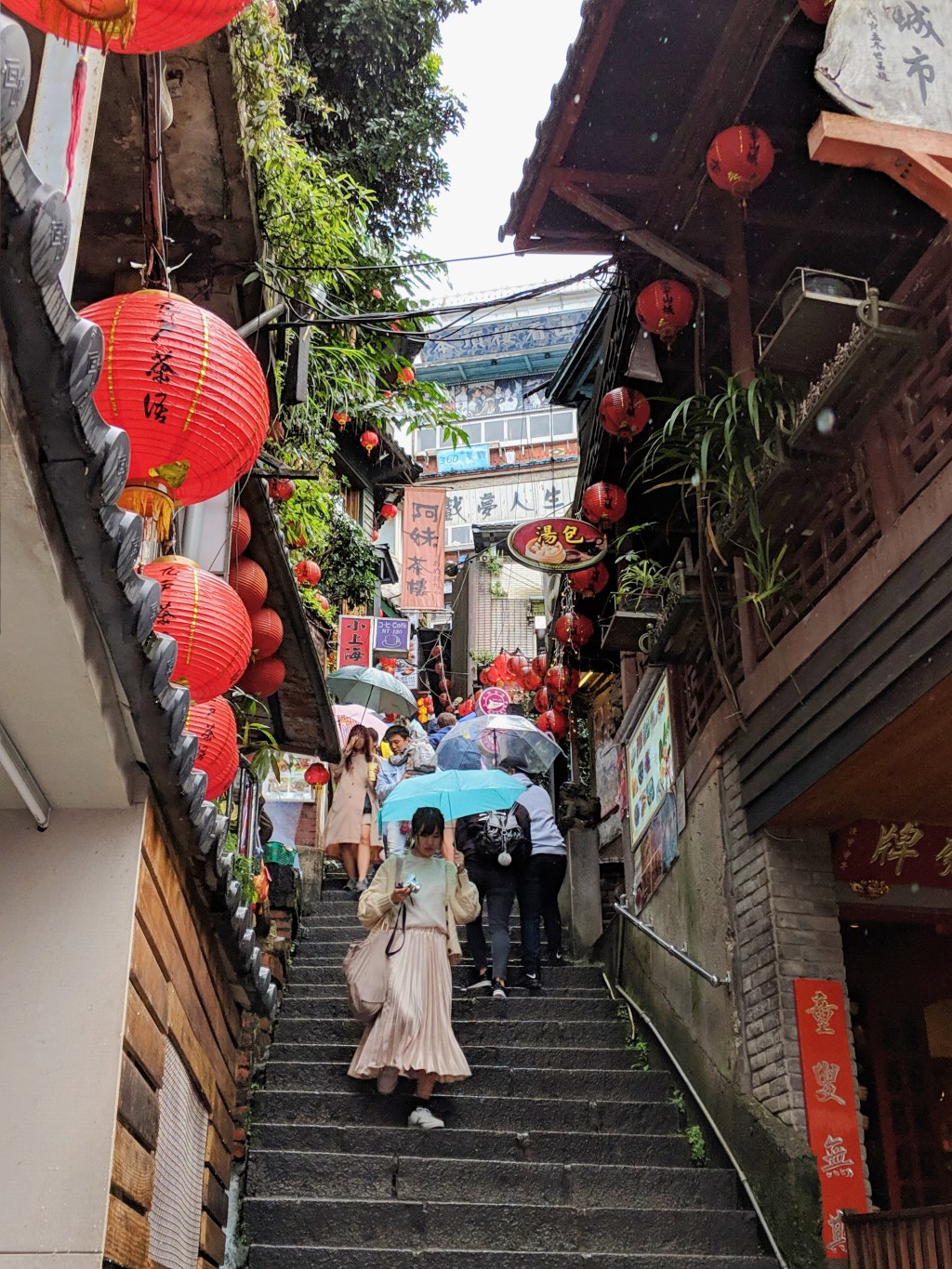
View from the Top The entrance into the famous winding side streets of Jiufen is almost missable. It’s next to a convenience store, but it beckons with the bright red lanterns strewn along the sides of the roads, lighting the way. The closer you get to the Old Town, the more aromatic the air becomes from the cooking food wafting and mixing together, beckoning you in. My advice is to get to Jifuen as early as you can. We were able to see the streets, or alleyways, and walk in relative peace. But, within an hour the throngs of tourists took over, and the peacefulness was gone. That being said, it’s still enjoyable you will just be jostling for views, photos, and seats.
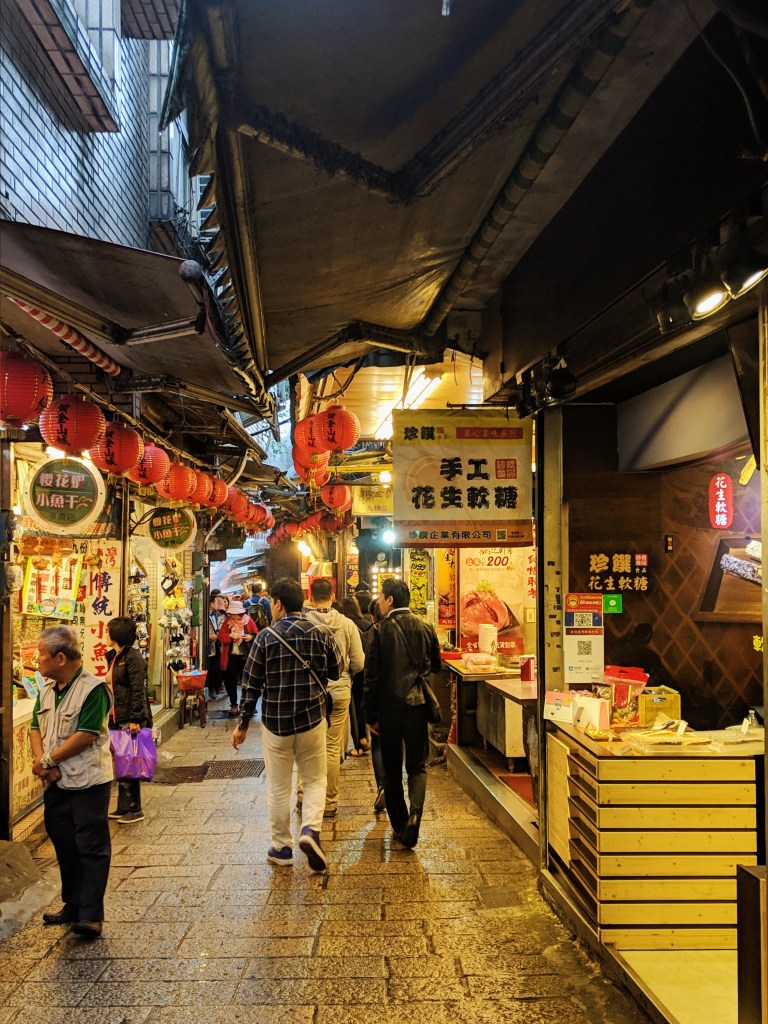
Entrance to Old Jiufen 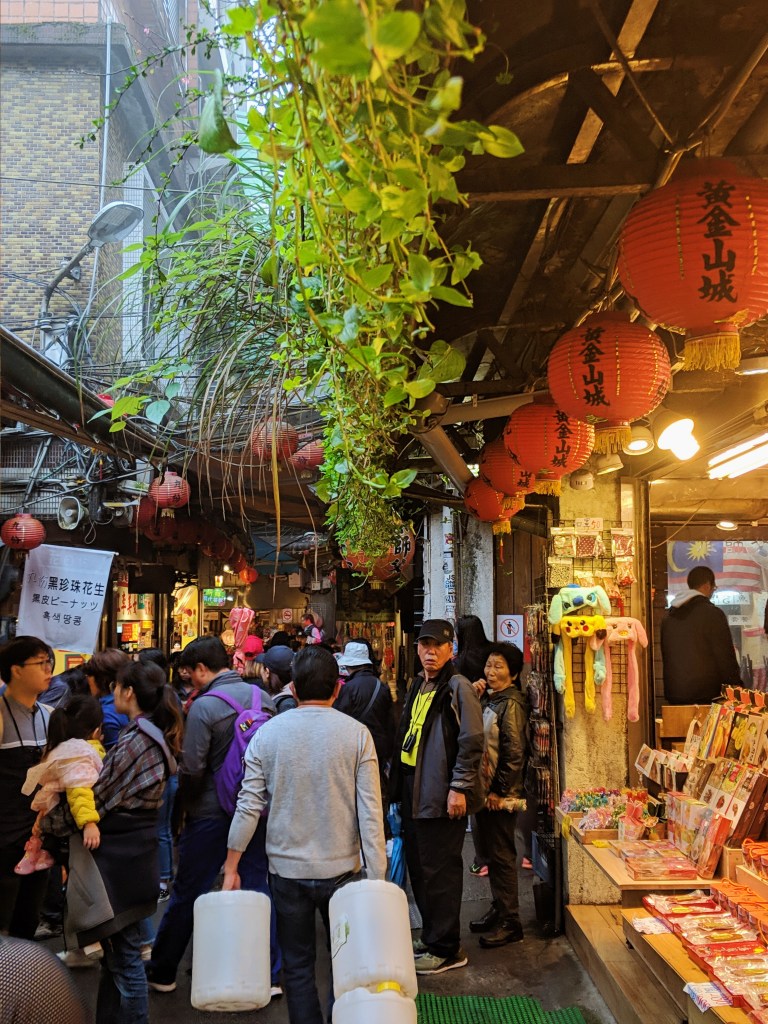
Winding Through the Streets Recommendations:
Wander the streets and eat as you go. Whatever entices you, grab it. Food culture in Taiwan is all about the ‘small bites’ which enable you to take in vast quantities of food, should you want to. As you wander let the streets guide you, you will have to make some decisions at the junctions I recommend down and then back up.
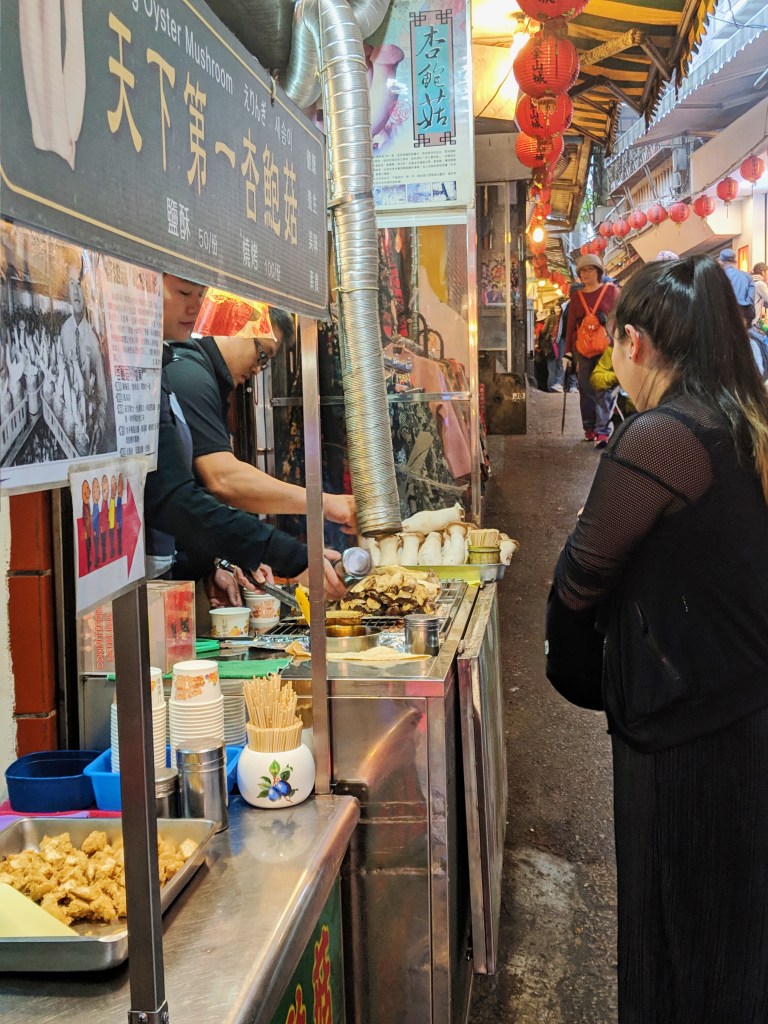
Street Vendor Selling Mushrooms 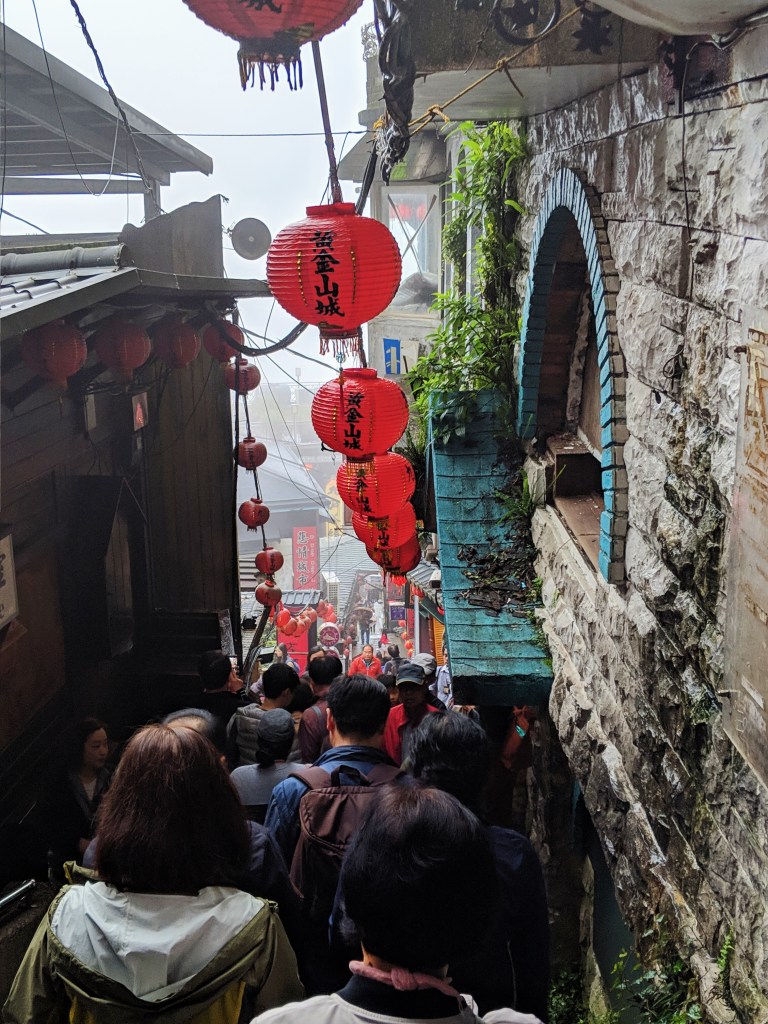
Moving Through the Crowds 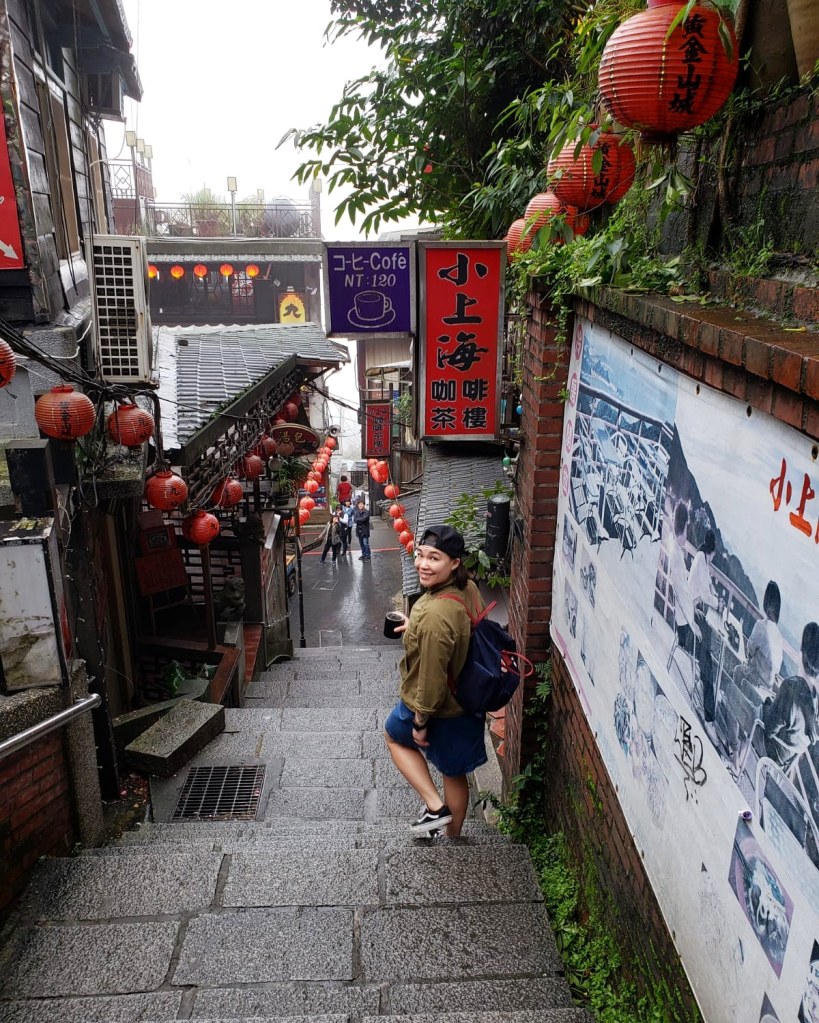
A Rare Empty Street Save the Jiufen Tea House for after your first-morning stroll through the neighbourhood. It is an incredible place to relax, unwind, and find solace in the chaos. The tea house offers a traditional tea ceremony where you pick your teas and snacks, and then for the first pour you will be guided through the process of making the tea. There are many steps involved so pay attention to get the most out of the experience. Taiwan is famous for their oolong tea,
I recommend getting an oolong because it can be re-steeped multiple times. Each steep reveals a slightly different flavour profile, which becomes a journey in and of itself. I recommend sitting outside for incredible views of the city, the lush vegetation and the ocean below. We were fogged in, but it made it moody and left us to quiet contemplation. There is also an art gallery and an art workshop below the tea house you can explore.
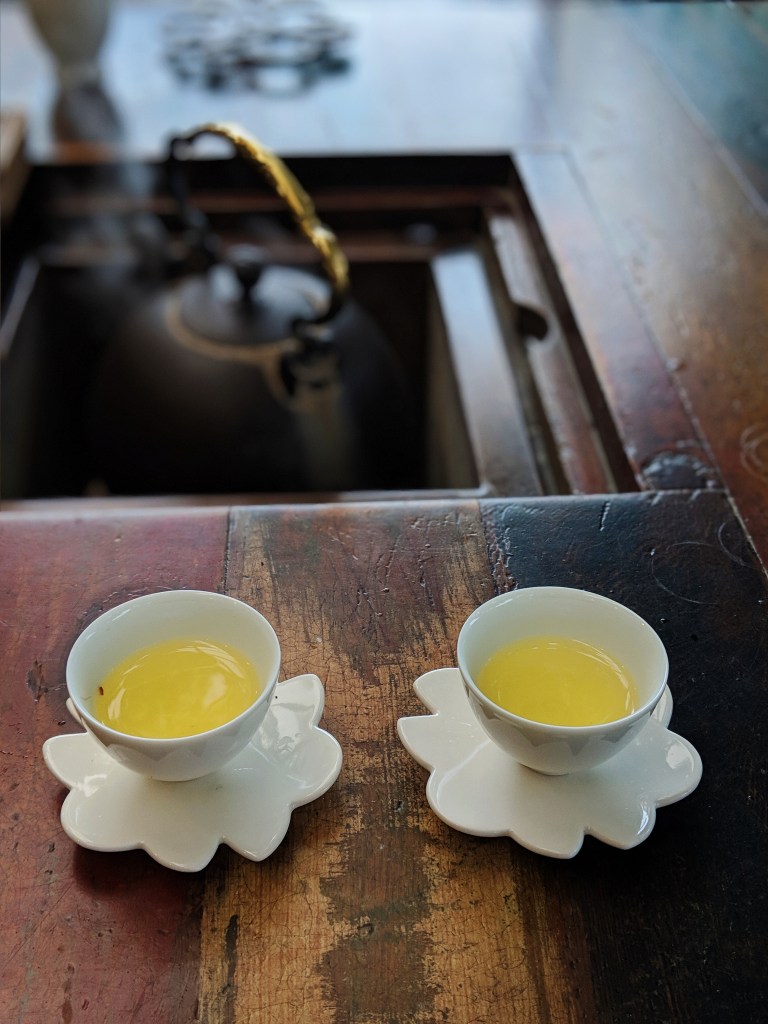
Traditional Tea Ceremony 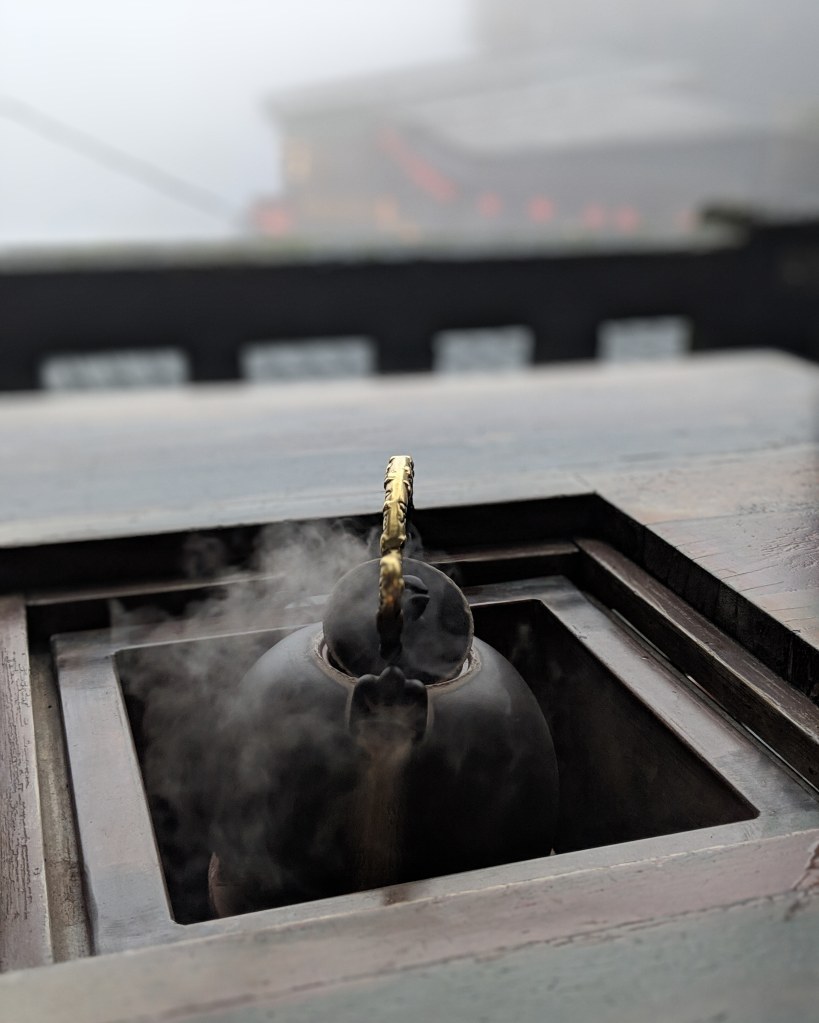
View over Jiufen 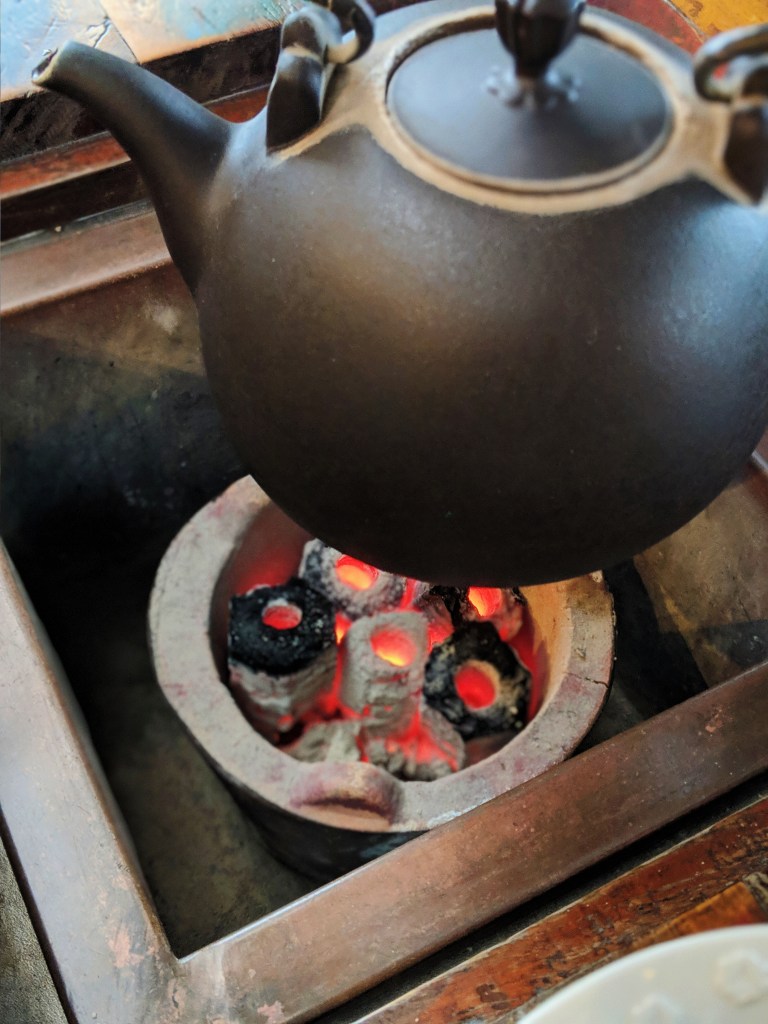
The Fire Pit for Boiling Water 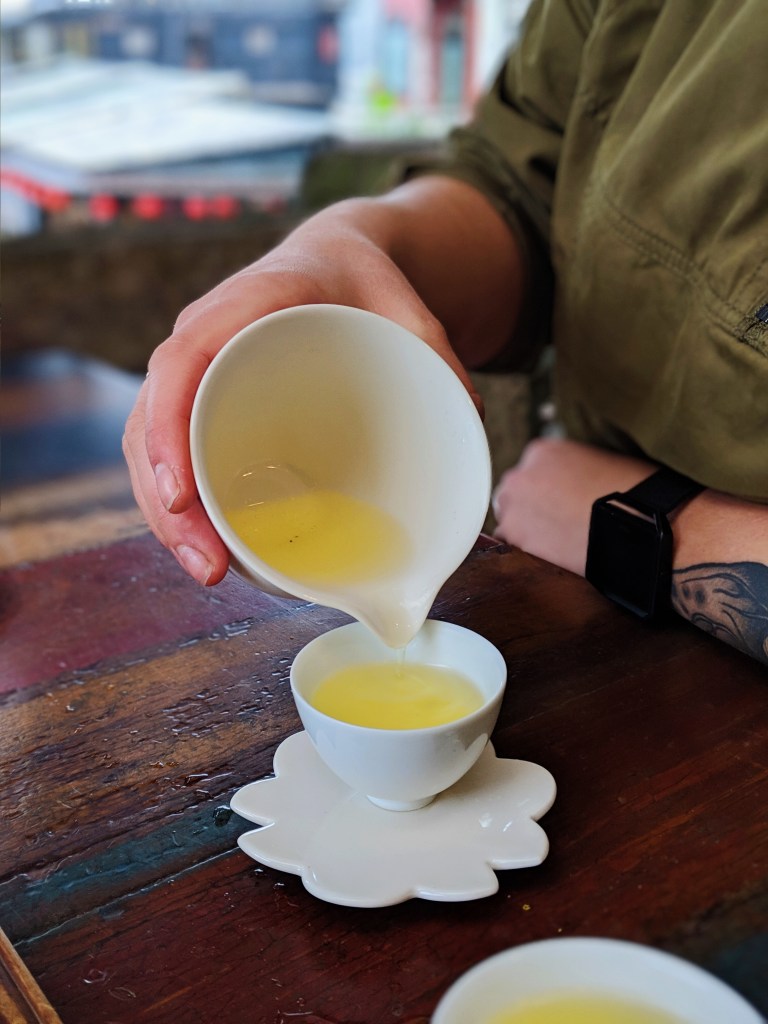
Serving Our Brewed Tea With hunger knocking, we left the solace of the tea house to find more snacks and explore more treasures of the city. When you venture up just past the tea house you will find several great shops for gifts and souvenirs. One of my favourites is the famous ‘Cat Shop.’ There are two resident cats inside, but don’t be saddened if they give you the cold shoulder or play coy. Here you will find a stunning array of cat-themed products, cute but also thoughtfully blended into the intricacies of Jiufen. Cat culture is strong in this city, and Taiwan at large. Stock up on postcards, stationery, washi tape, metro card holders, tote bags, and much more. If you have cats, they also sell the most adorable catnip toys. The catnip is next level, my cat approves. A little further up there is another shop that specializes in Lucky Cats.
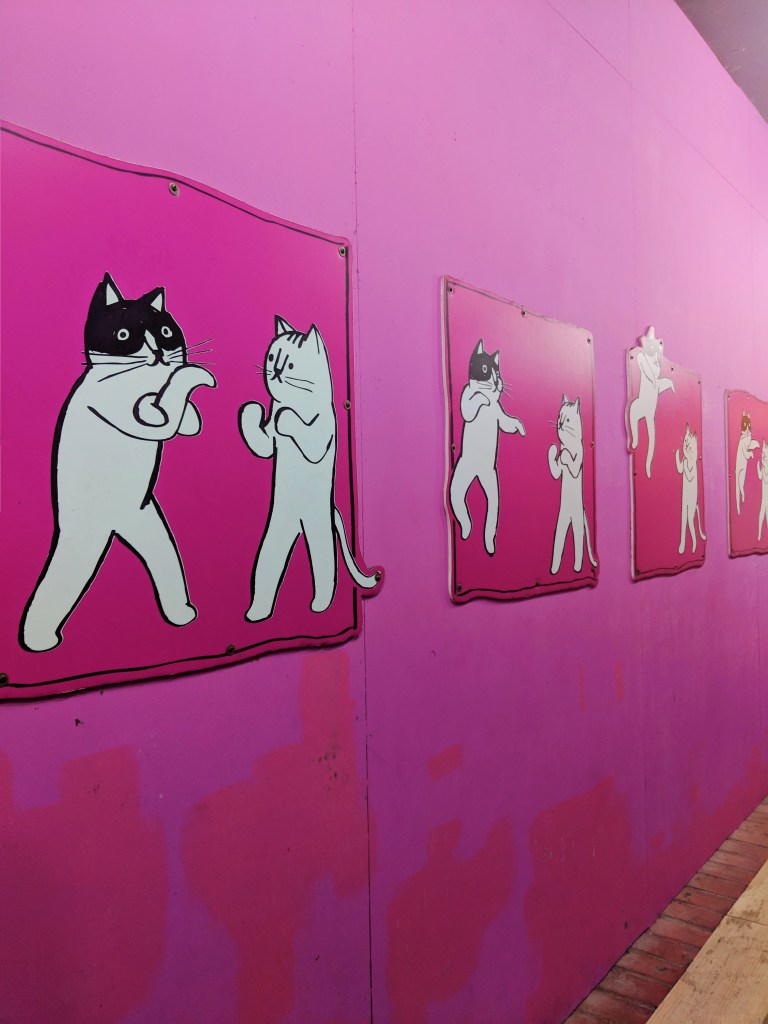
Ninja Cats 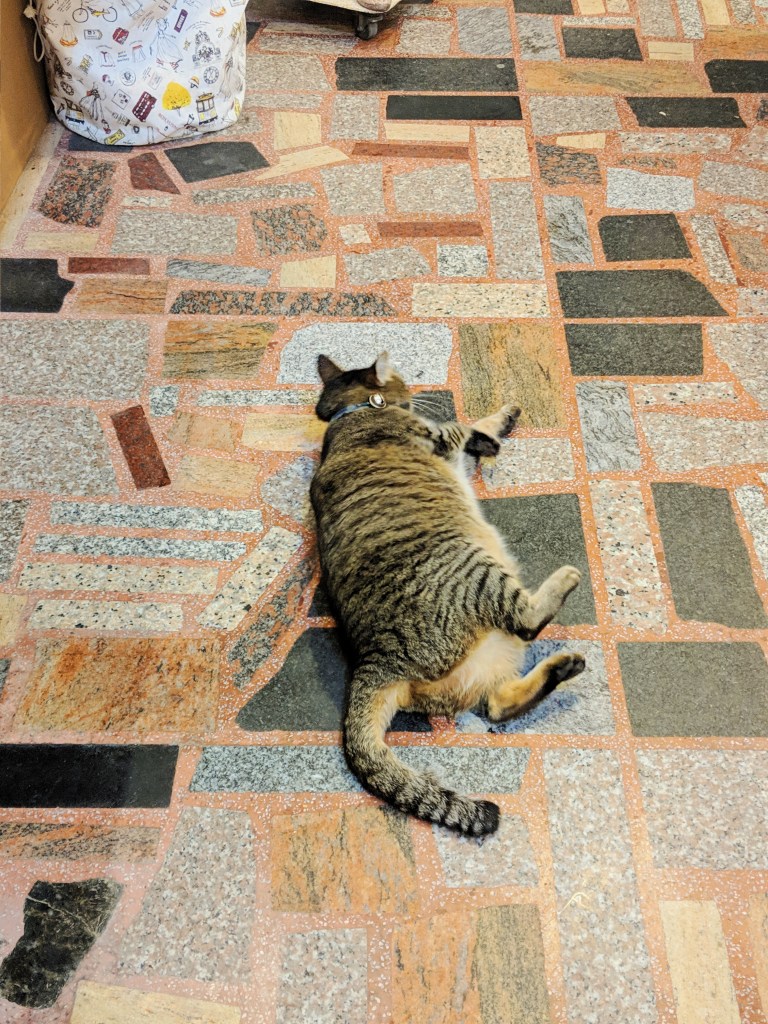
Resident Cat 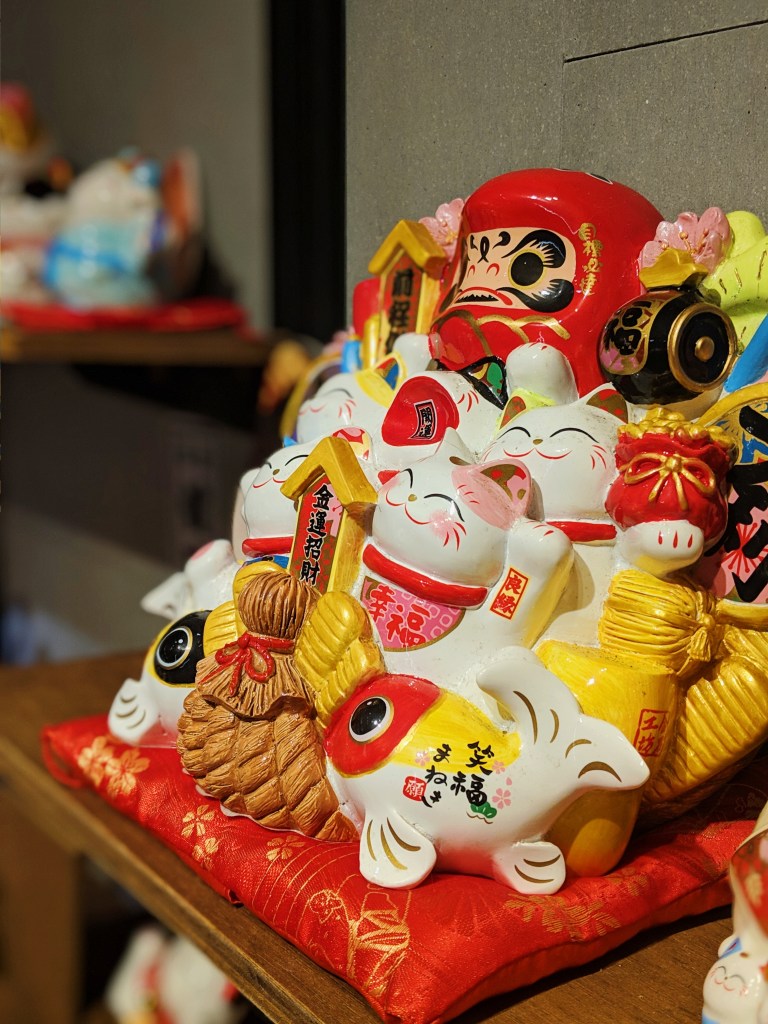
Lucky Cats The most fascinating aspect about Jiufen was the winding streets that take you deep into the heart of the town. On every corner, there was something to seek out and explore. Not to mention the incredible viewpoints along the edges. The discovery process was so exciting because not only were the streets were brimming with food, souvenirs, and various products, each store held something unique inside. I recommend giving yourself a day to meander and explore without too much of an agenda, you will definitely be rewarded.
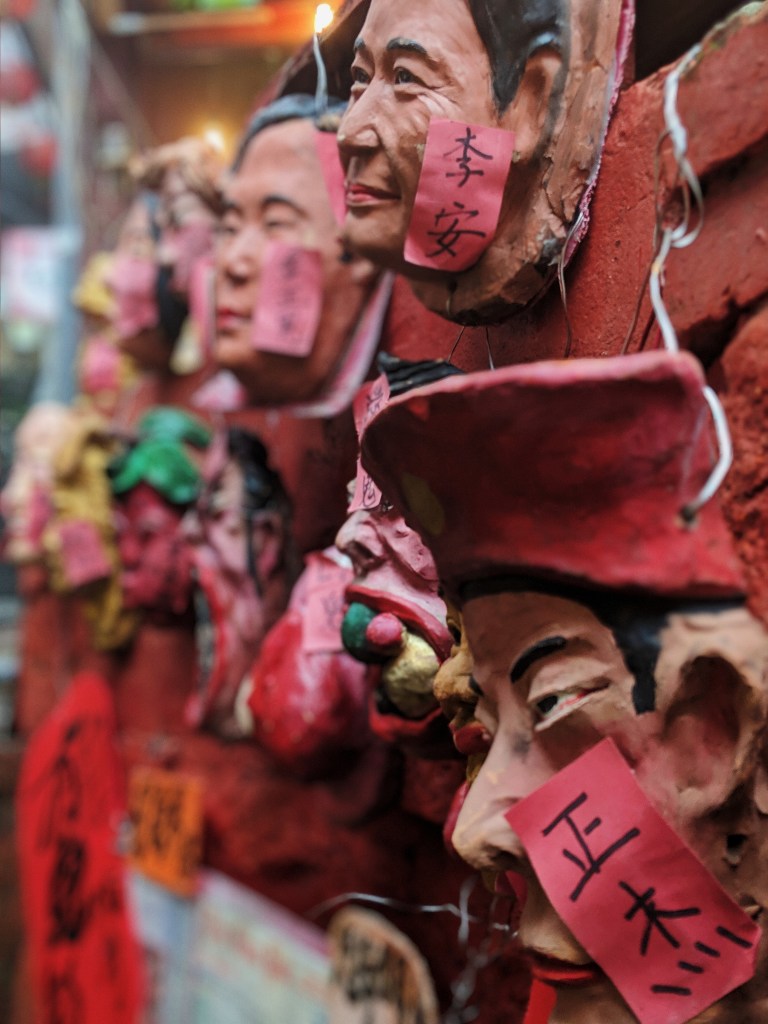
Masks for sale on the street 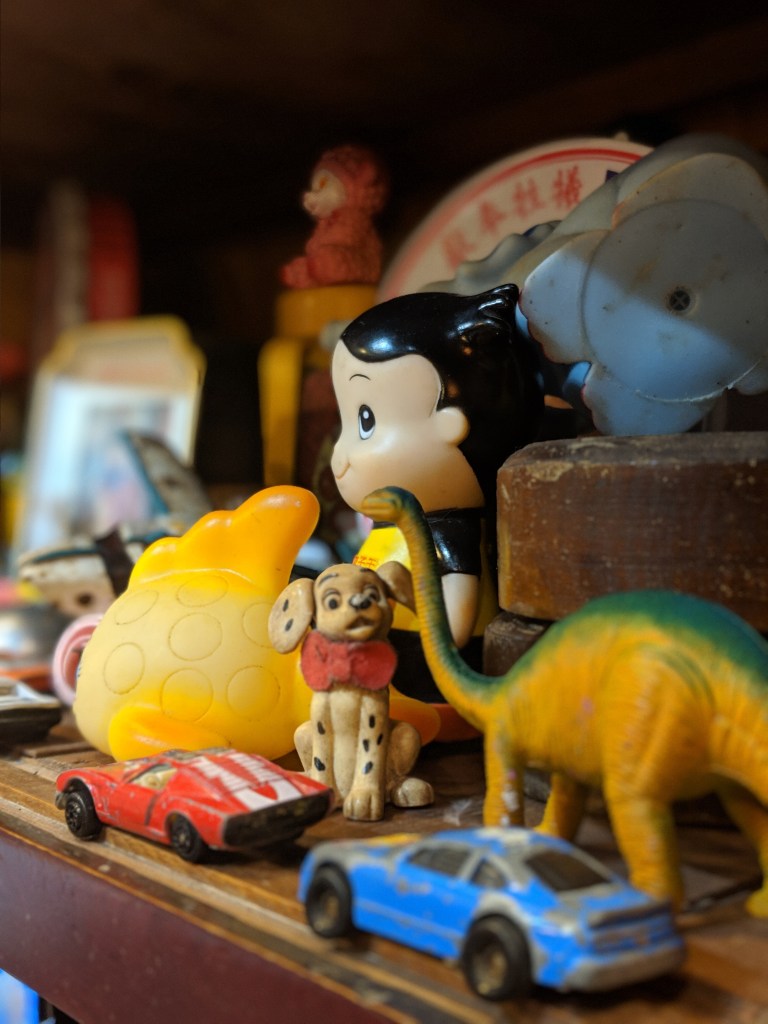
Vintage toys
-
Taipei – A Cultural & Culinary Adventure


The city is bustling, dense, and cultured. A beautiful blend of old and new as the city modernizes its cosmopolitan roots. Despite the concrete jungle that is a compact city of 2.6 million people, the side street culture is mesmerizing; different areas will yield concentrations of different foods, shops, bars, and markets. While green space offers respite from the city and the thick humidity that can bog you down in the afternoon hours. Street art can be seen strewn throughout the city, offering glimpses into the pop culture, politics, and history of Taiwan. The vibe is one of renewal, forward-looking, and excitement. It felt like there was mounting change as young entrepreneurs carve out a place for themselves in the city — building, creating, designing, and cultivating the present and the future.
Food Scene
The food scene in Taiwan is incredible. The list of iconic food seems never-ending, in the best possible way. There is a beautiful balance of sweet and savoury waiting for you around every corner, whether it is a street vendor or a restaurant. Some of the coolest and delicious foods I have eaten were in Taiwan. There is also a significant Japanese influence meaning you will find a great selection of top quality Japanese offerings, such as the Donburi at Manjedad in Shongshan. Whatever your proclivity, follow your heart and nose and you will not be disappointed — also, small bites. Snack culture is king when you have so many options.
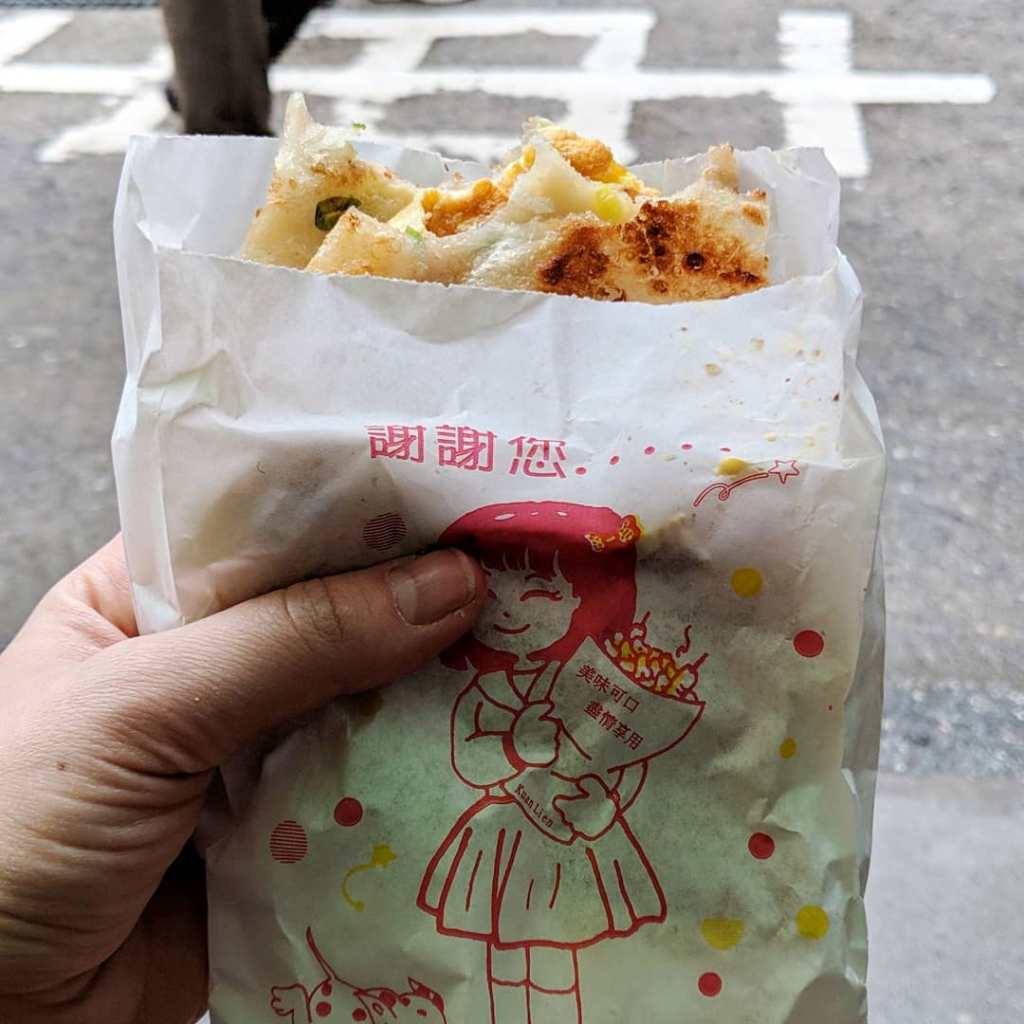
Scallion Egg Pancake 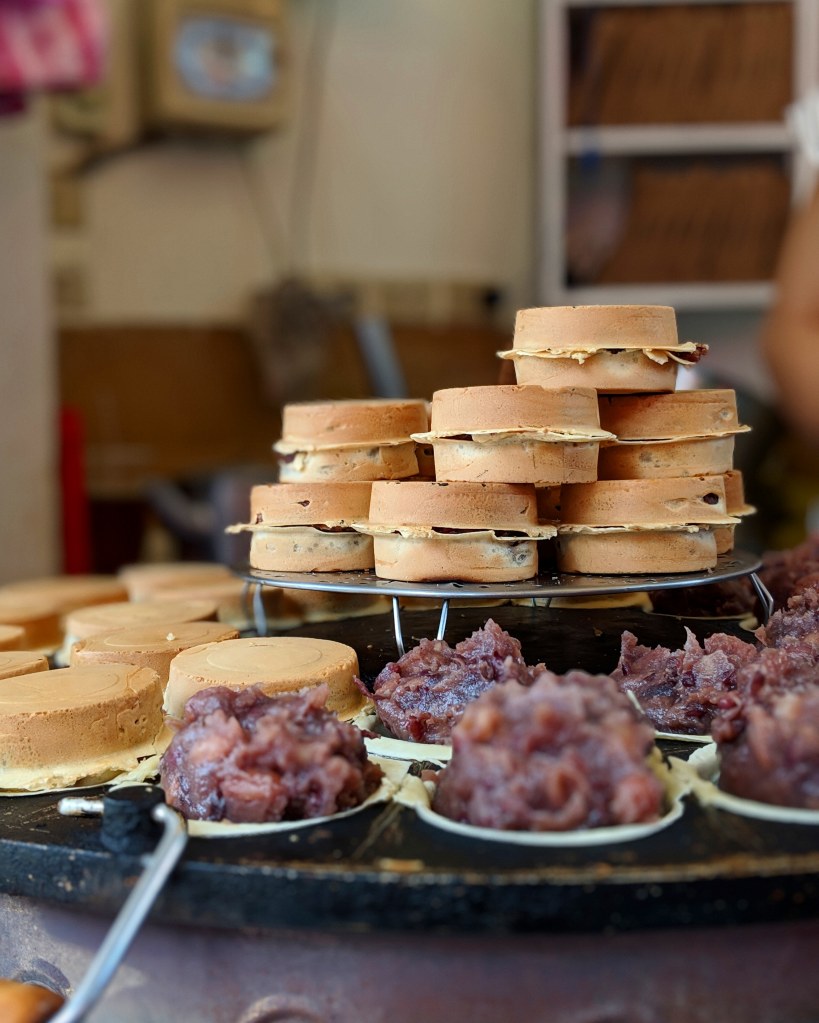
Wheel Cakes 
Donburi at Manjedad Night Markets
Raohe Street Night Market
This is a remarkable food market, which operates at a dizzying, yet composed pace. The selection of food is wide-ranging, so go hungry and take your time. Things don’t start going until about 6 pm but don’t be scared if it seems quiet, get in there and start eating. Right at the beginning of the market is a famous bao eatery, they have the process dialled in so don’t be afraid of the line. On the east end of the market is the Ciyou Temple. You can access the market on the Taipei Metro, the closest station is Shongshan Station.
Recommendations in Raohe St. Market
- Take your time as your eyes will be bigger than your tummy, so it’s worthwhile to use the slow snack strategy.
- Bring cash, markets run on cash.
- The food runs down the middle of the market, with shops and sit-down style restaurants along the edges.
- I recommend stopping in for a massage, about halfway into the market on the right hand side if the temple is behind you. They are reasonably priced and friendly.
- There are also many non-food shops offering an assortment of goodies to take home. I recommend finding a spot to sit, and people watch. The energy in the city is electric, and it’s worthwhile to stop and take it all in.
- Keep an eye out for the fancy bakeries, this is where you can get cakes and treats to take home.
Wufen Pu Shopping District
This shopping district is a worthwhile stop if you are looking for stylish offerings that highlights the fresh and eclectic trends in Taipei. The prices are reasonable and the assortment thrilling, I could easily have spent the entire day getting lost in the shops. Keep an eye out for: jeans/jeanswear, cute/feminine styles, funky t-shirts, hats, and socks (I should have bought more).
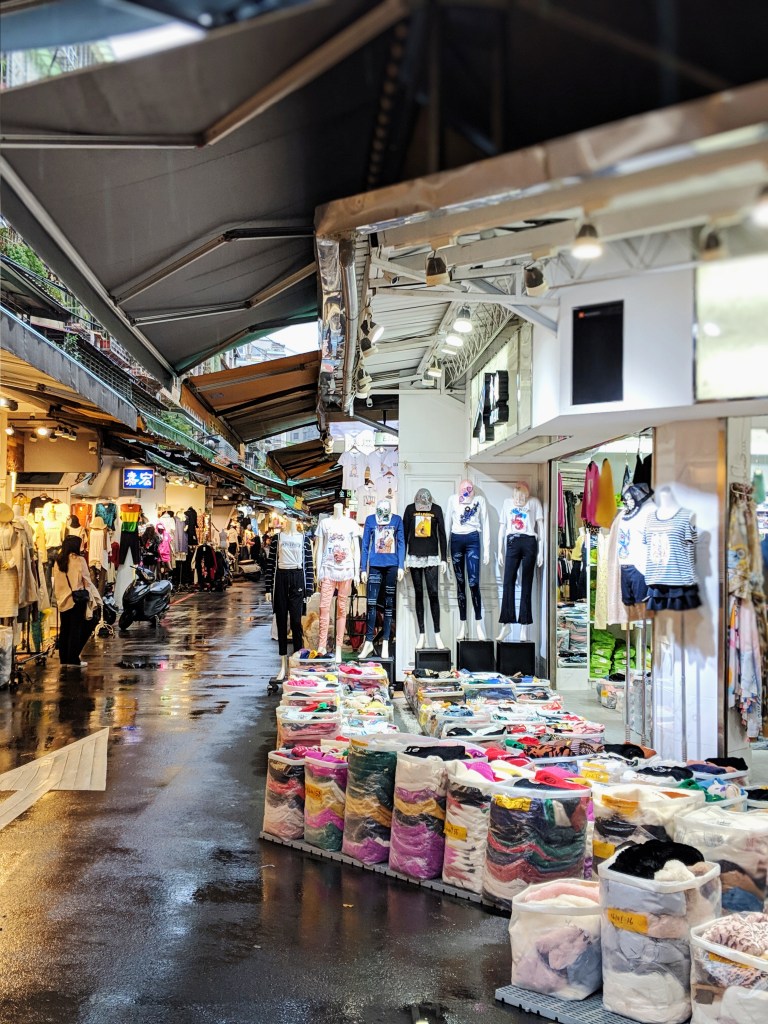

The market is outdoors but has some awnings, so some areas are covered. It’s a great spot if you need to shop and it’s raining. They smartly have street food vendors sprinkled throughout, so when the hunger hits you don’t have to venture far to refuel. It is also a few blocks away from the Raohe Market, so two birds with one stone.
Culture Parks
Cultural Parks in Taiwan are concentrations of artists and makers in refurbished industrial buildings, creating a beautiful blend of contemporary uses within historical architecture. With the artists come the restaurants, bars, and cafes offering an assortment of options to keep you fuelled up on your cultural explorations.

Huashan 1918 Culture Park Huashan 1918 Culture Park
What was once a concentrated area for the production of wine and sake from 1920s-1980s is now a vibrant destination for artists (in varying mediums), makers (creating an incredible assortment of things you need in your life immediately), green space for relaxing, and a medley of restaurants, cafes, and bars. One of the things that struck me was the preservation of the buildings, which were beautiful sprawling brick buildings. The buildings are imbued with their history, which is visible in the architecture while also allowing for the contemporary style to show through.
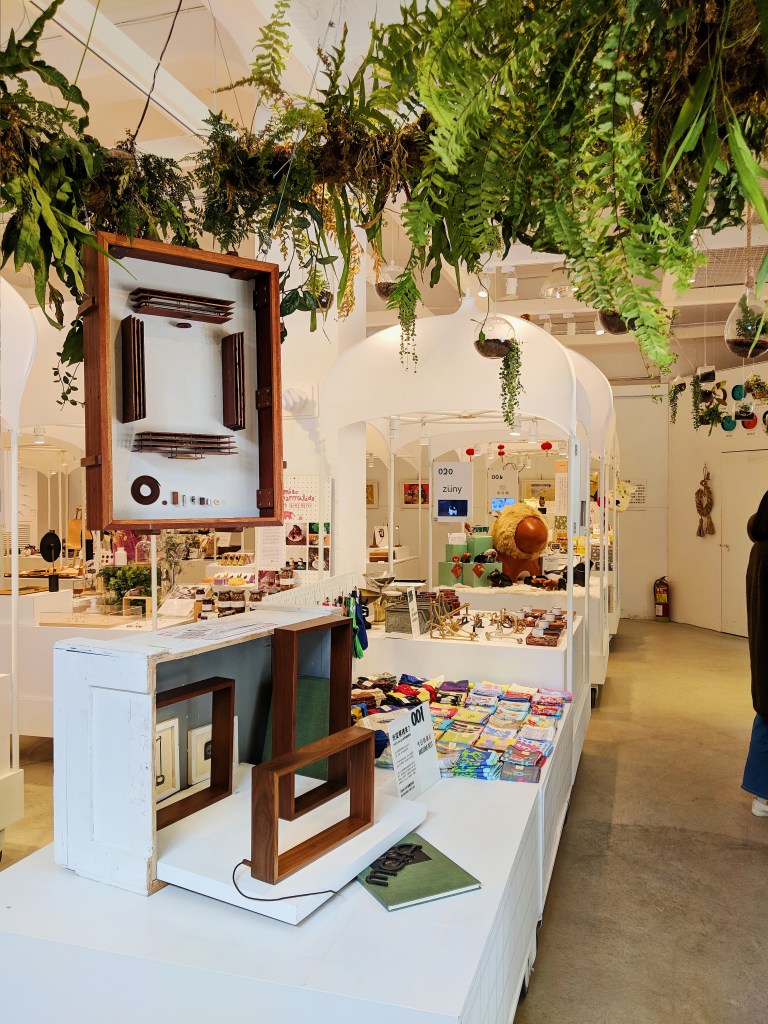
Gala Asia Shop 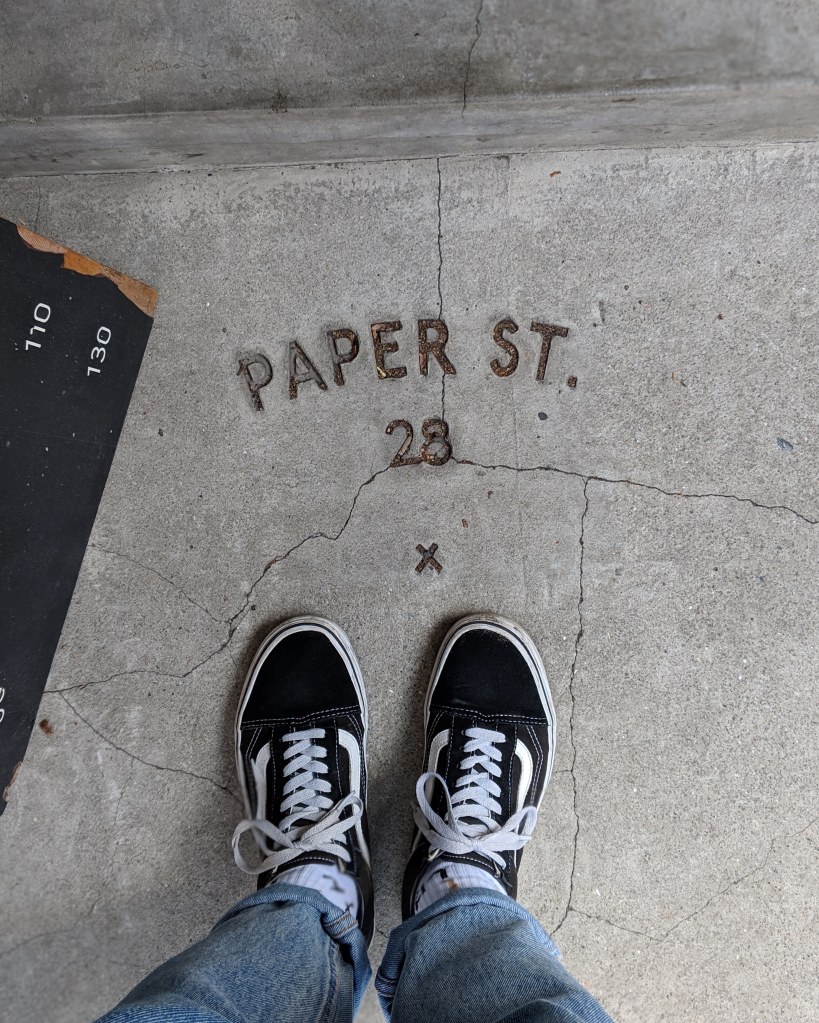
Paper St. Coffee 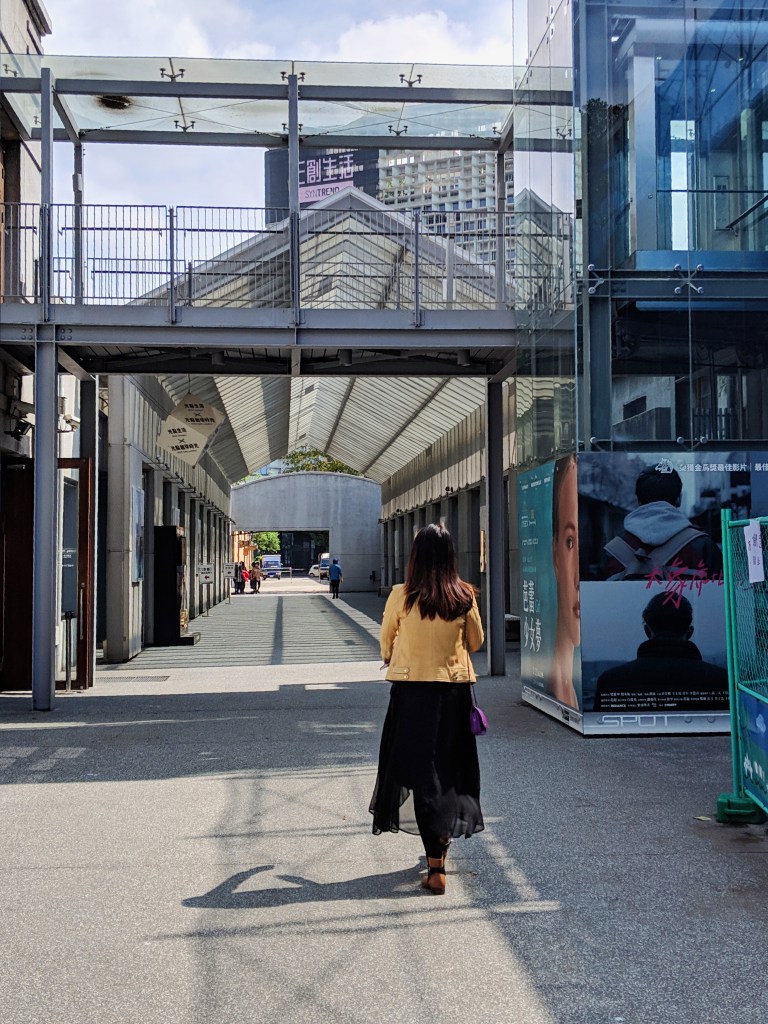
Exploring the park Little easter eggs of time are strewn through the buildings in the form of decorative accents and design, keep your eyes peeled. There are large sprawling green spaces that offer a nice contrast to the urban environment surrounding and encasing the park. There is a semi-permanence to the area as pop-up shops, and temporary exhibitions move in and out of the park, meaning there is always something interesting on offer. Check the website before you go to see what is happening because it is constantly changing.
Recommendations in Huashan 1918
- Just wander and explore.
- If you have time, book one of the DIY activities, it is a great way to meet locals, make something with your hands, and learn about another culture. Plus, what a fantastic souvenir to take home.
- The Gala Asia shop, which is a beautiful assortment of handmade products, ranging from art prints, clothes, pins, books, jewellery, and food. If you’re lucky, they may have local craft beer available for purchase. This shop experience is a must.
- Eco Hub/ Ecological Engineering Foundation which brings to life the conservation efforts in Taiwan. Showcasing the different principles and strategies for a more sustainable future.
- Pop-Ups Shops
- Across from the park is Paper St. Coffee, stop here to rest your feet and refuel.
Songshan Neighbourhood & Culture Park
Songshan is both a neighbourhood and a culture park. I recommend starting in the district and wind your way to the culture park. Note that on Sundays, things don’t open until noon, so prepare accordingly. There are loads of shops, cafes, and restaurants tucked into the side streets of this area. If you are looking for brunch, this is a great place to indulge; however, there are loads of other tasty restaurants nestles in the side streets of this neighbourhood. Here is a link to a podcast on the Monocle about the food scene in Songshan. Card is accepted here, but have some cash as many of the shops prefer it.
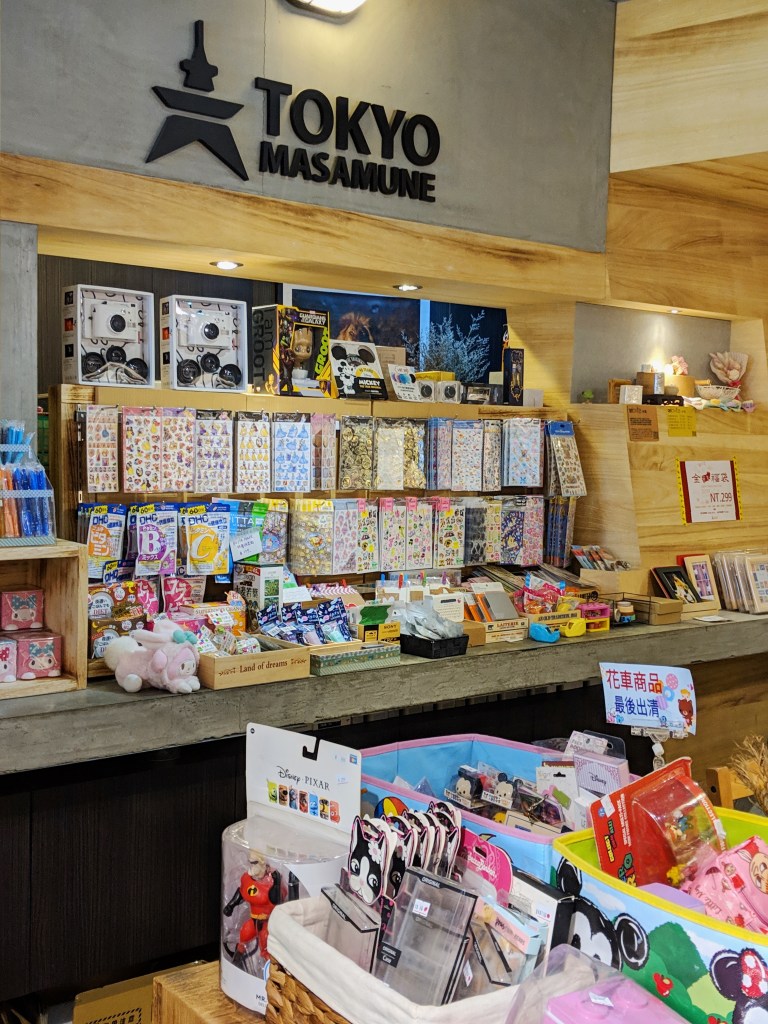
Stationary Shop 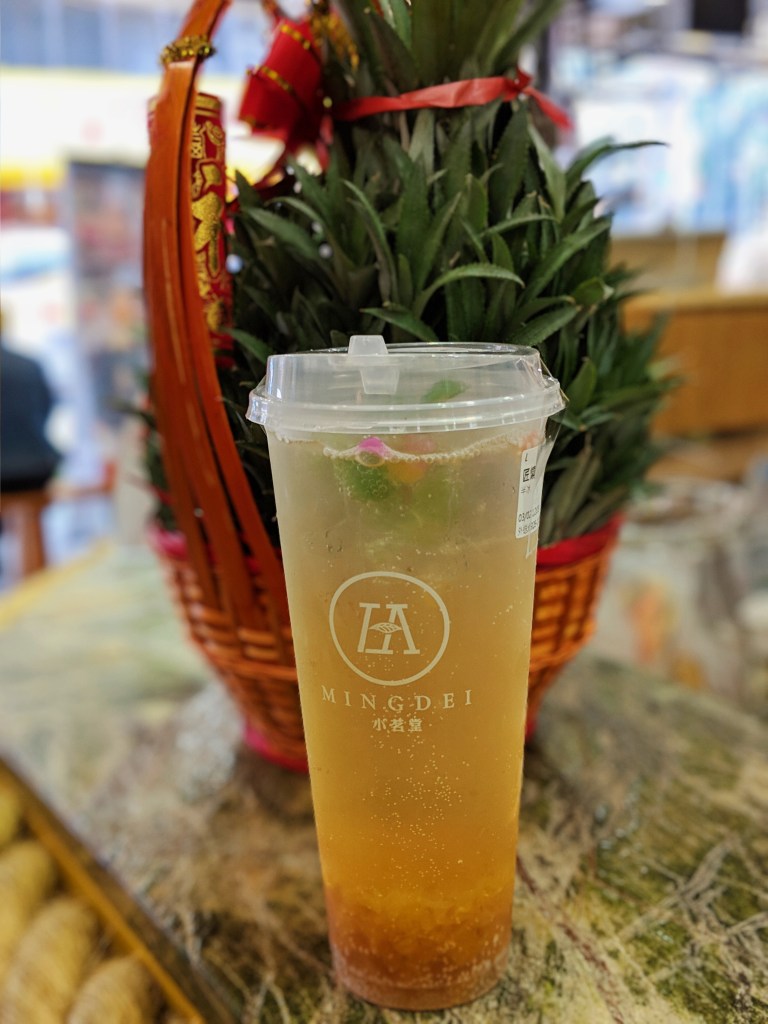
Mingdei Bubble Tea 
Residential Area 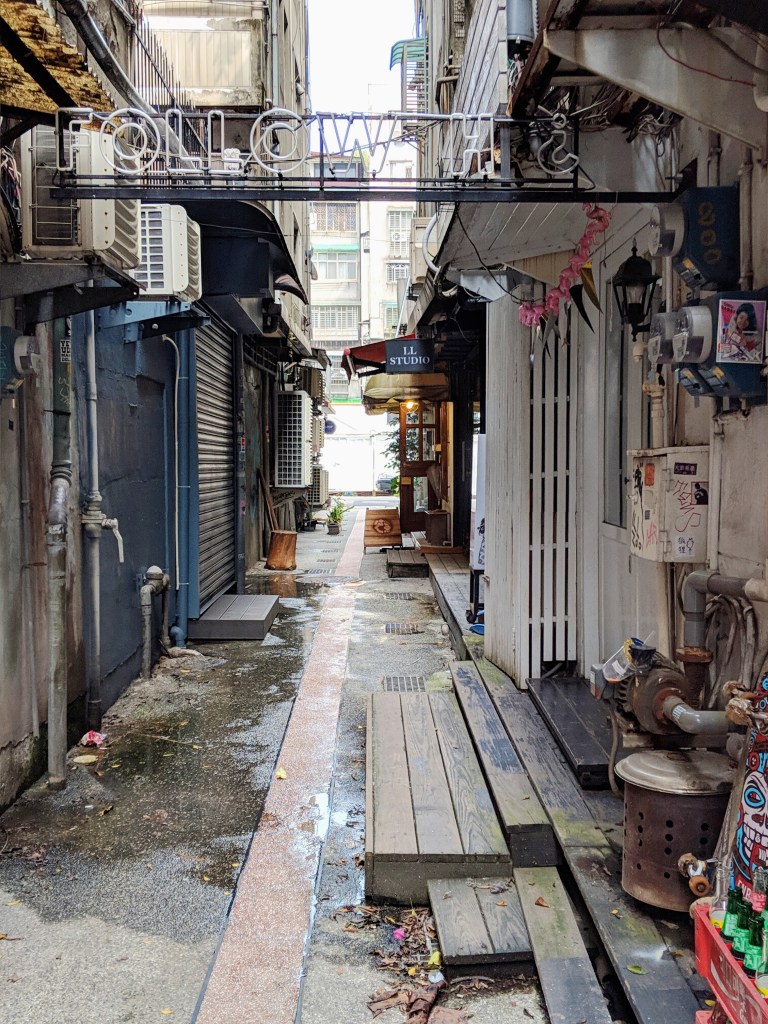
Alley Shops One super fresh bubble tea place we stumbled on is Mingdei, a delightful and contemporary twist on bubble tea. They use sparkling water for a refreshing spin and candied pineapple instead of the traditional toppings. Prepare to go shopping there are loads of independent designers, local and international, offering trendy street wear for all styles.
Songshan Culture & Creative Park
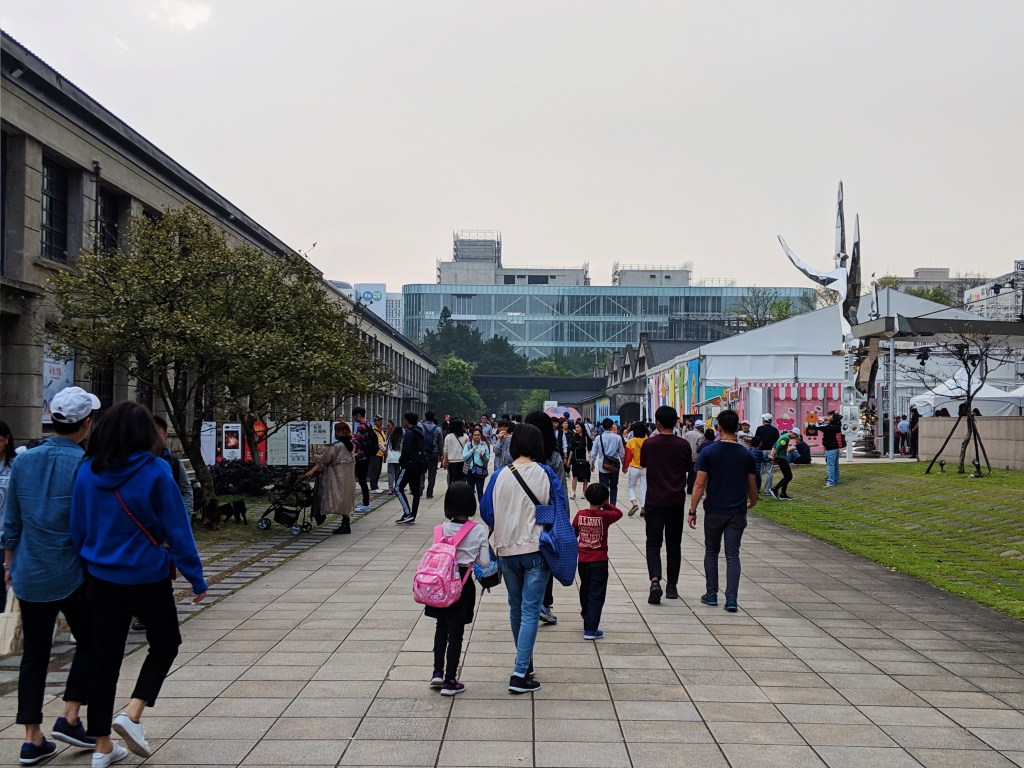
To get to the culture park, walk through the garden, along the pond to the Yue Yue Bookstore (the green building). From here you veer right and head towards the cultural spaces. Songshan is very similar to Huashan 1918, in that there are gallery and exhibition spaces are housed within the old industrial buildings. Although some of the exhibitions are free, many require an entrance fee. If you intend to explore the different galleries, I recommend purchasing your ticket first. Pop-Up Shops are continually changing, so check before you go and don’t forget about the street performers throughout the park. On your way back to the Metro, detour for coffee at StandUp.

Yue Yue Bookstore 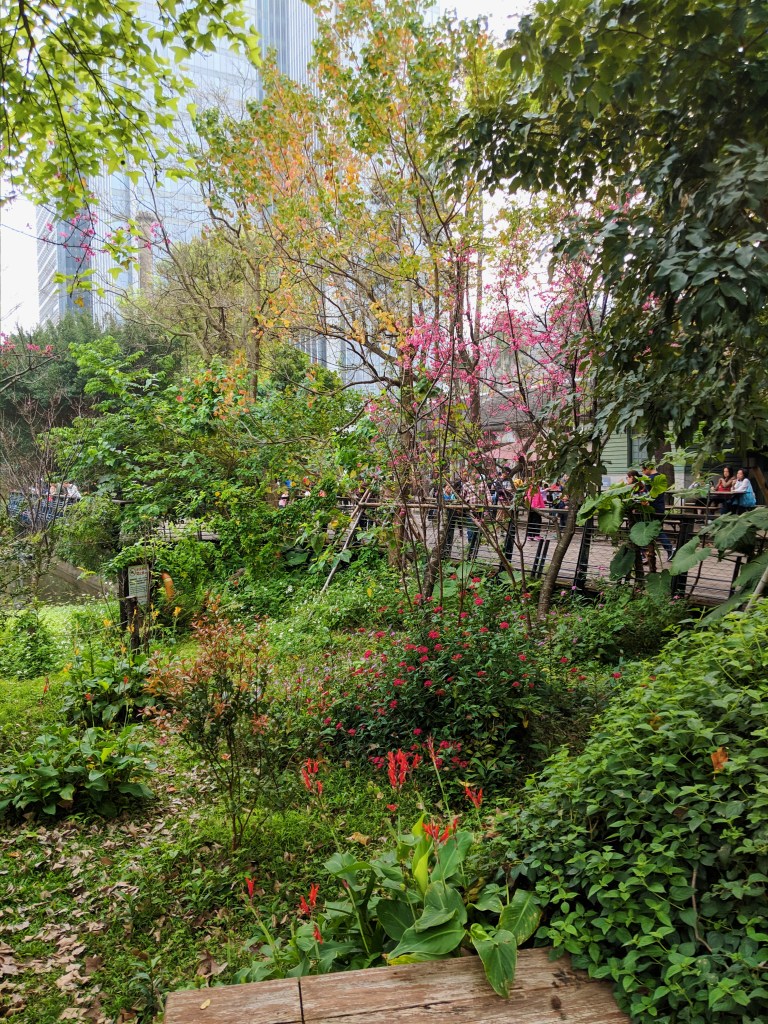
Garden next to Yue Yue 
Interior Gardens 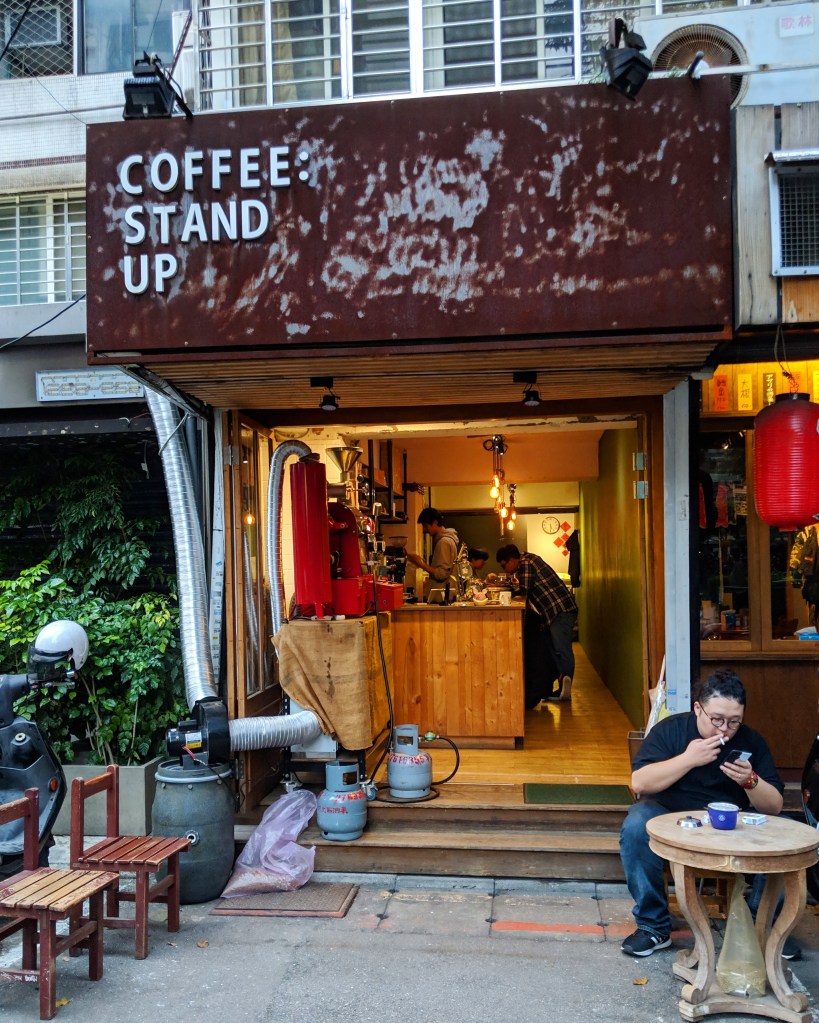
StandUp Coffee Getting Around
Transportation is wide-ranging, from the well connected metro system, (Metro Taipei), busses, city bikes (YouBike), rideshare, and taxis to get you where you need to go. I found the metro system clean, organized, and easy to use. I purchased an Easy Card at 7/11. You have to put $100NTD on the card to start, but I recommend adding a little extra because you can use them for the train and at convenience stores. It’s a great way to have easy cash for small purchases. Taipei is also very walkable, once you are in your desired neighbourhood streets twist and turn, with loads of side streets to wander and get lost.
Accommodation
We stayed at the Meander 1948 Hostel, which was terrific! I was hesitant to stay in a hostel at first because I haven’t stayed in one in years and felt like I had outgrown this accomodation option. However, once we arrived, I was surprised in the best way. A stylish building, with contemporary finishes the lobby houses a delightful cafe offering pour overs, espresso-based coffees and light pastries. A netted lounge area hangs over the sitting area, offering an excellent place to relax after a long day of exploring. There is also a patio, but the mosquitos do get a bit overwhelming later in the evening. The location is super central, a few blocks from the main train/bus station. You can wander the tiny streets adjacent to the hostel for bars, cafes, restaurants, shops, and loads of street food. You will not be hard-pressed to find delicious food on every corner.

Common Room 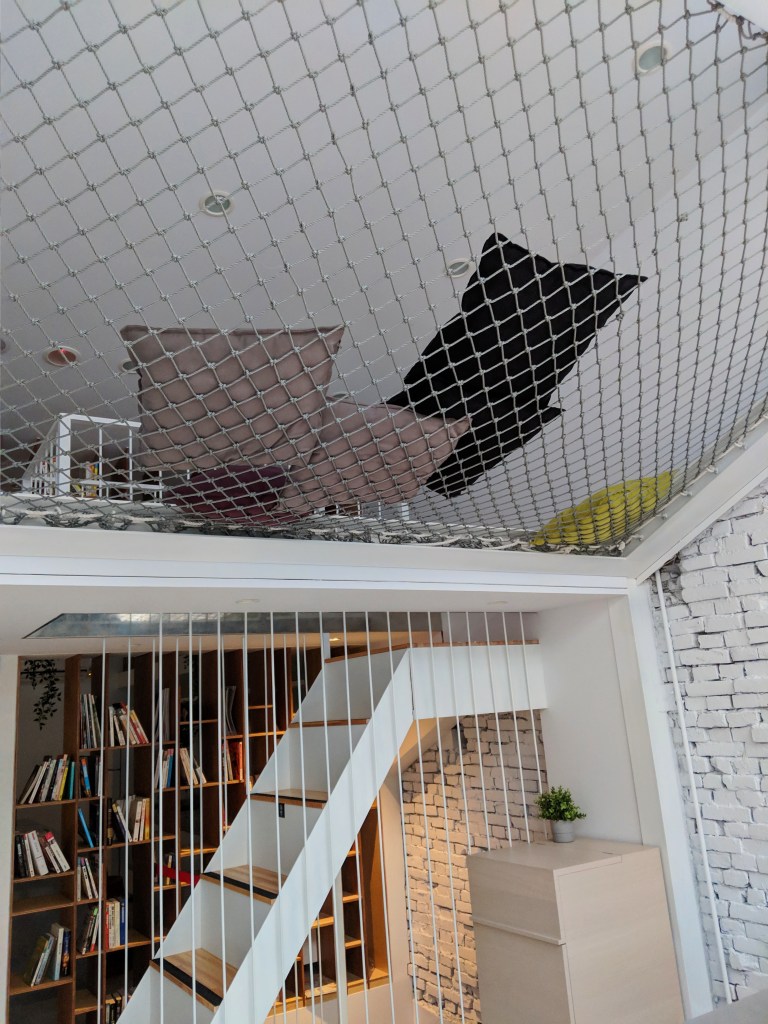
Net Lounge Area We stayed in a dorm, which was super clean and comfortable. The pods are bunk beds (with a staircase, no ladder issues here), thick curtains provide privacy while the beds are super comfy futons, with fluffy duvets and pillows. For security, you have a large cupboard that has security lock activated by your key card, plus an open space next to it for your suitcase etc. The facilities are super clean and modern; the showers have significant pressure and what seems like endless hot water.
What to Bring Home
- Pineapple Cake
- Oolong Teas
- Bubble Tea Accessories
- Handmade Items
- Stationary
-
-
Taichung – Street Food Heaven
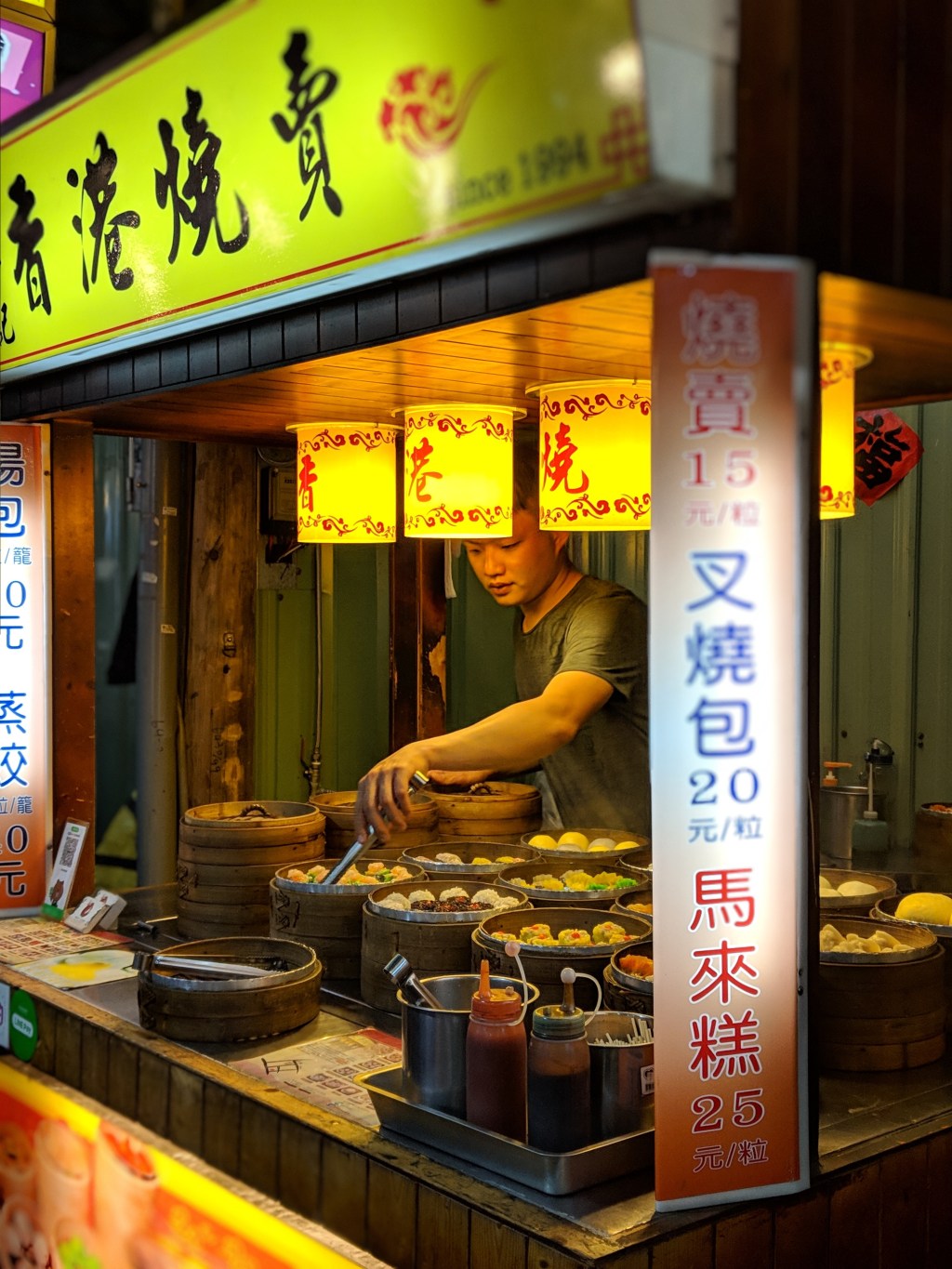

City Overview
The second-largest city in Taiwan, Taichung is spacious despite being a growing metropolitan center, with ample green space and walking paths throughout the downtown core. Although considered a slower pace to Taipei by locals, it felt both fast-paced and sleepy at the same time, with many of the same offerings as its bustling and dense neighbour Taipei.
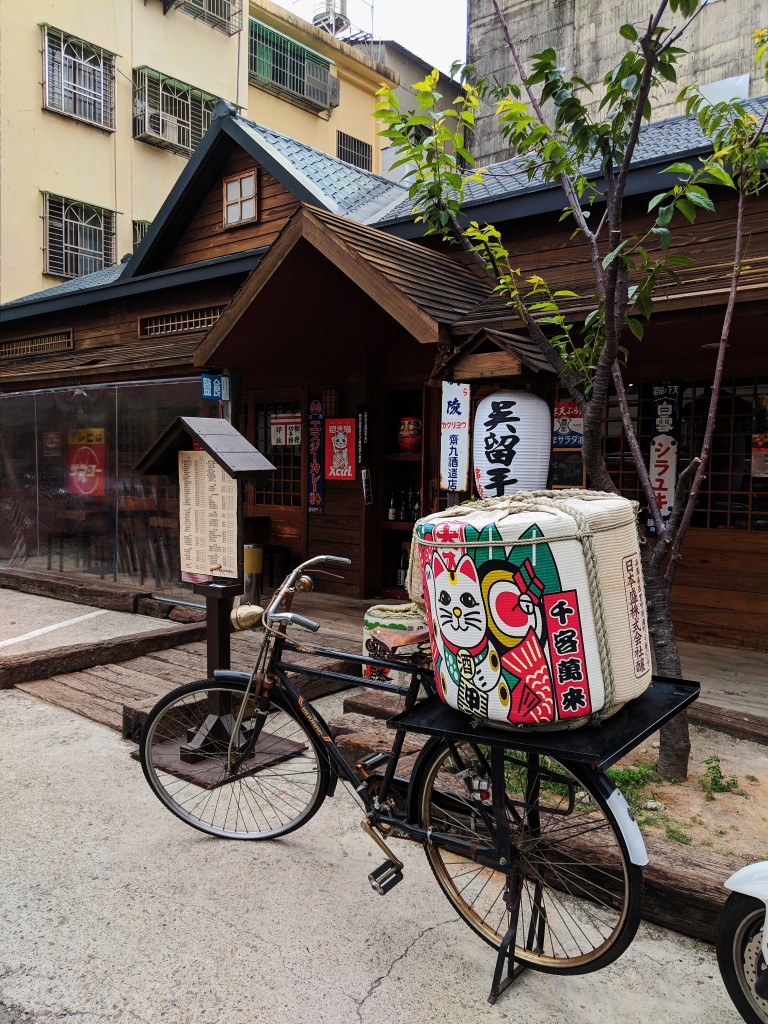
Exploring the City 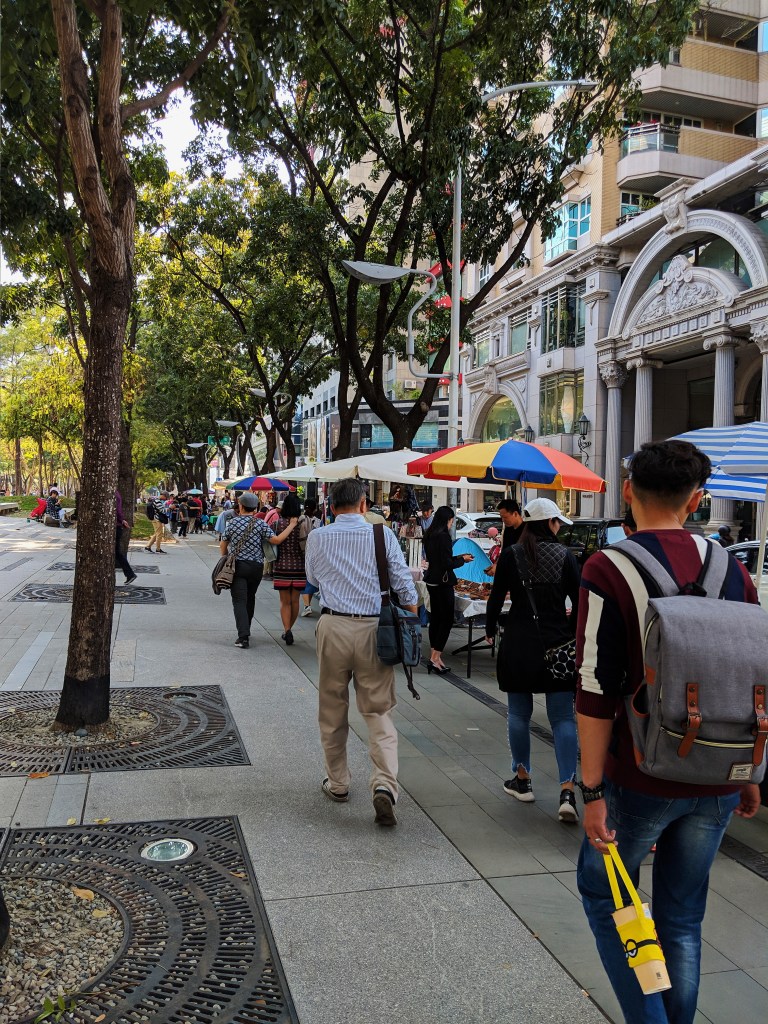
Weekend Street Vendors 
Taichung by Night 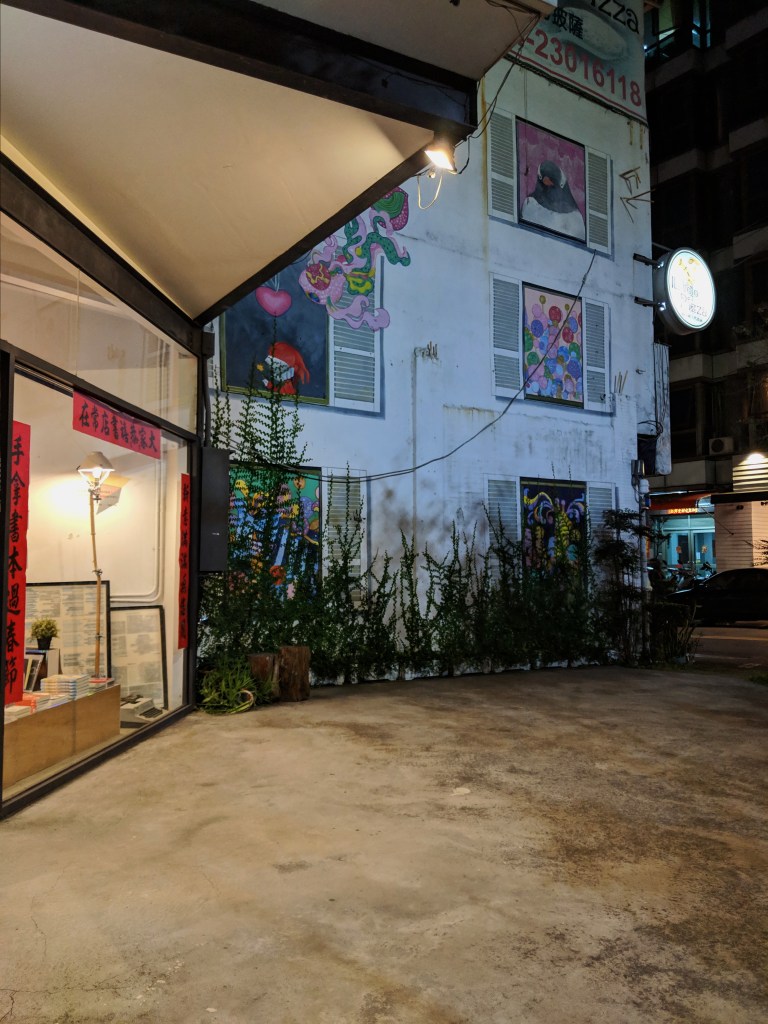
Tiny Book Store & Square If you are driving to the city from Taipei, which is what I did, you will be pleasantly surprised by the dense tropical vegetation that lines the highway. It took me by surprise how lush and verdant everything is, a reminder of Taiwan’s southern position in the East China Sea. A quick two-hour bus ride from the airport terminal (loaded up with bus snacks, of course) gets you into the bustling city of Taichung.
For the first leg of my trip, I was staying with my friend’s grandmother in the remainder of an old military dependent village, which was built to house soldiers fleeing China after losing the civil war. The houses are simple, but carry the mark of a by-gone aesthetic, of beautifully carved sculptures that adorn the buildings in various places, yet are a constant reminder of a violent past. This aesthetic charm was marred by the unpleasant history of these communities that were often thought of as ghettos and left disconnected from essential services for a long time. Despite this, the community is resilient, with many of its residents well into their nineties.
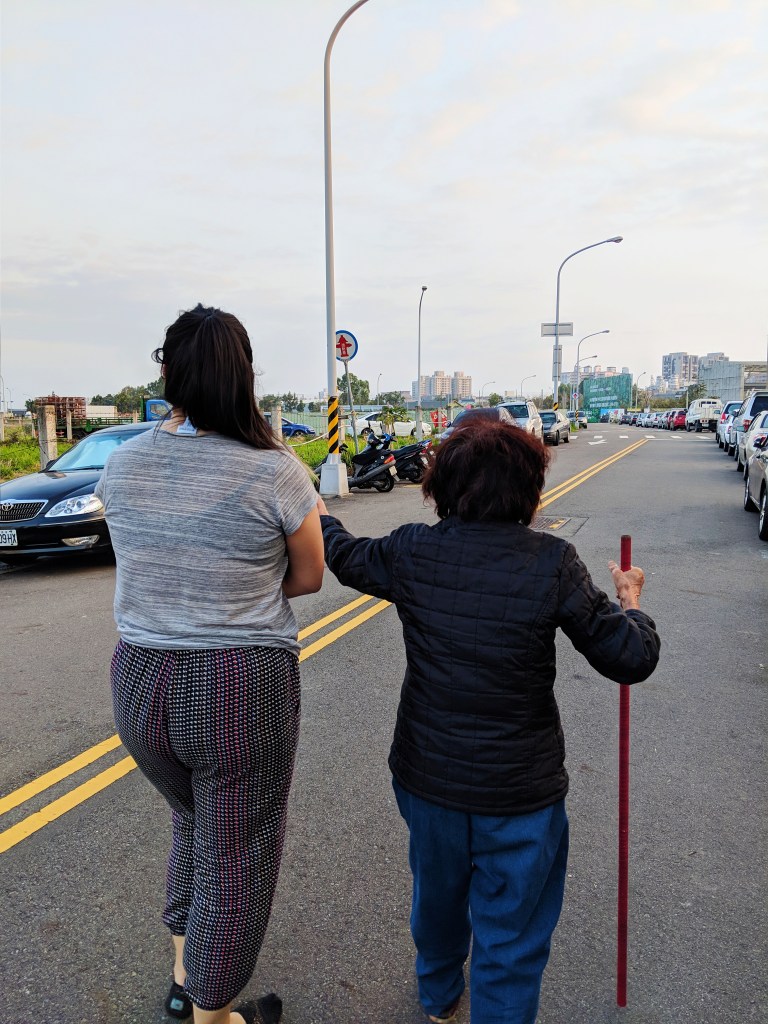
Lady of the house 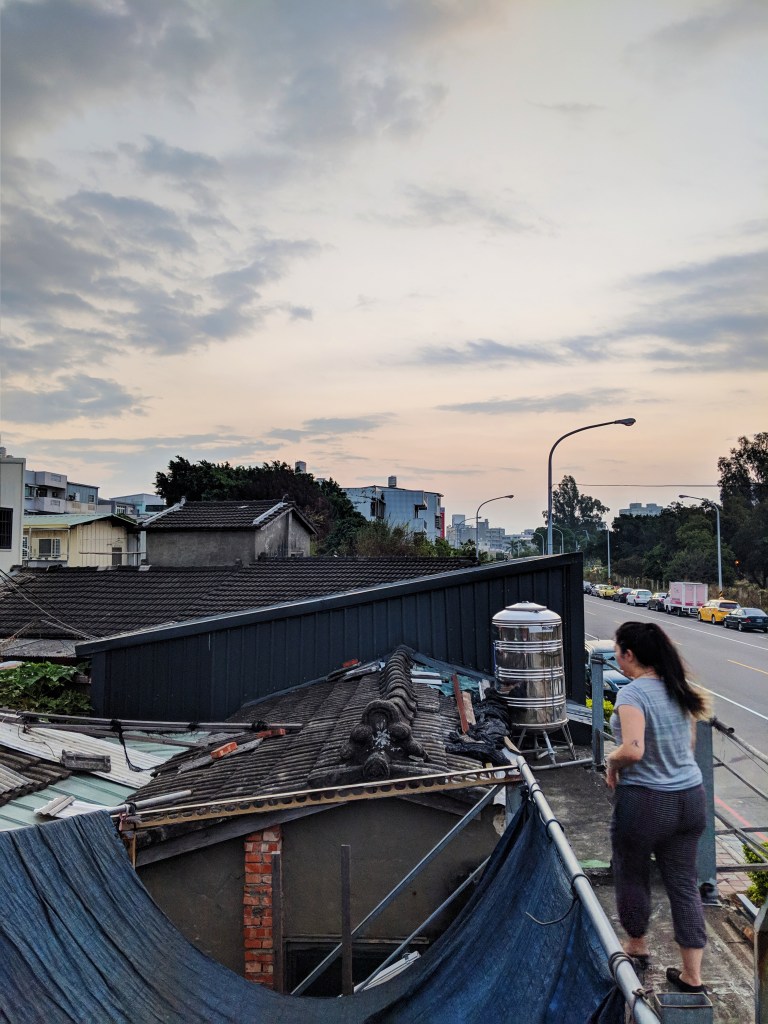
View from the roof 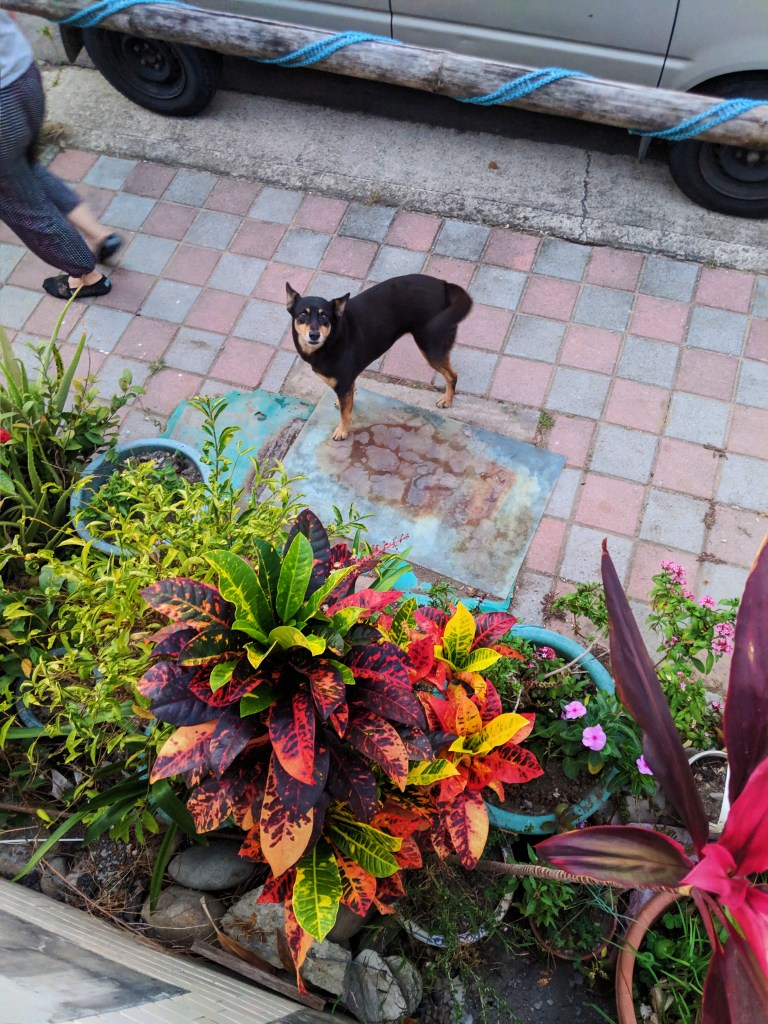
Family dog This was one of the quickest international trips I’ve taken, but I wouldn’t have changed a thing. I was lucky enough to travel with my friend and have the inside scoop on what to see and do, meaning my 4 days felt like 7 days.
Food Hot Spots:
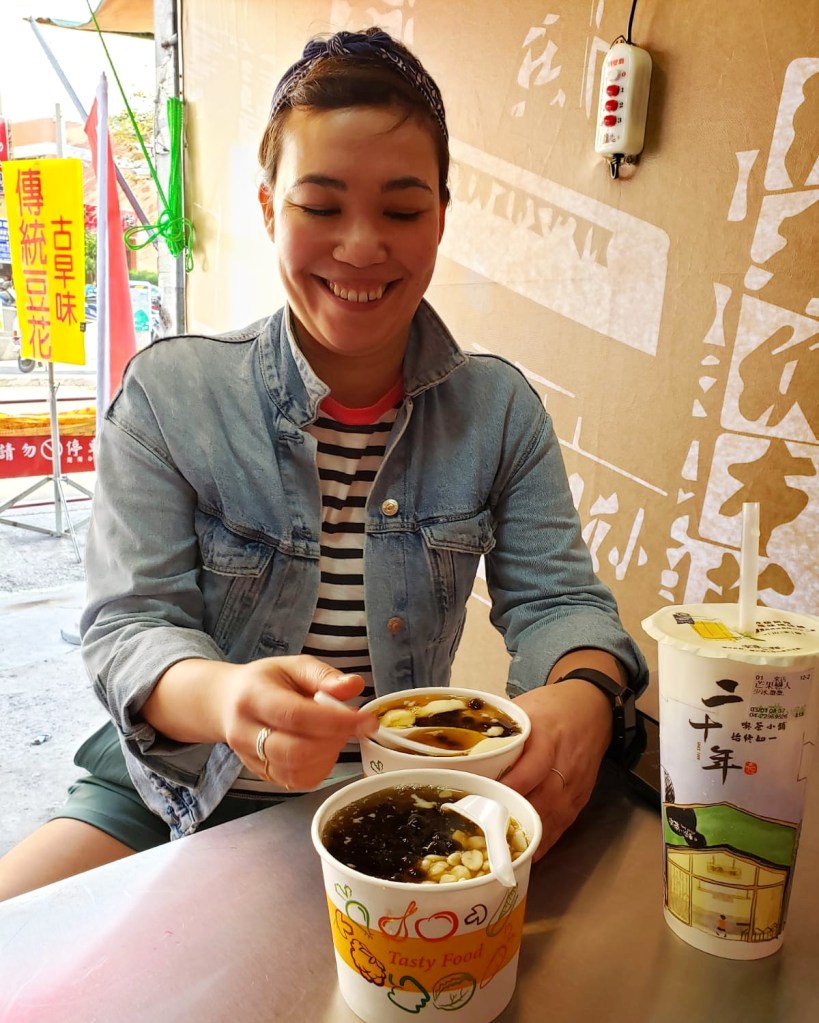
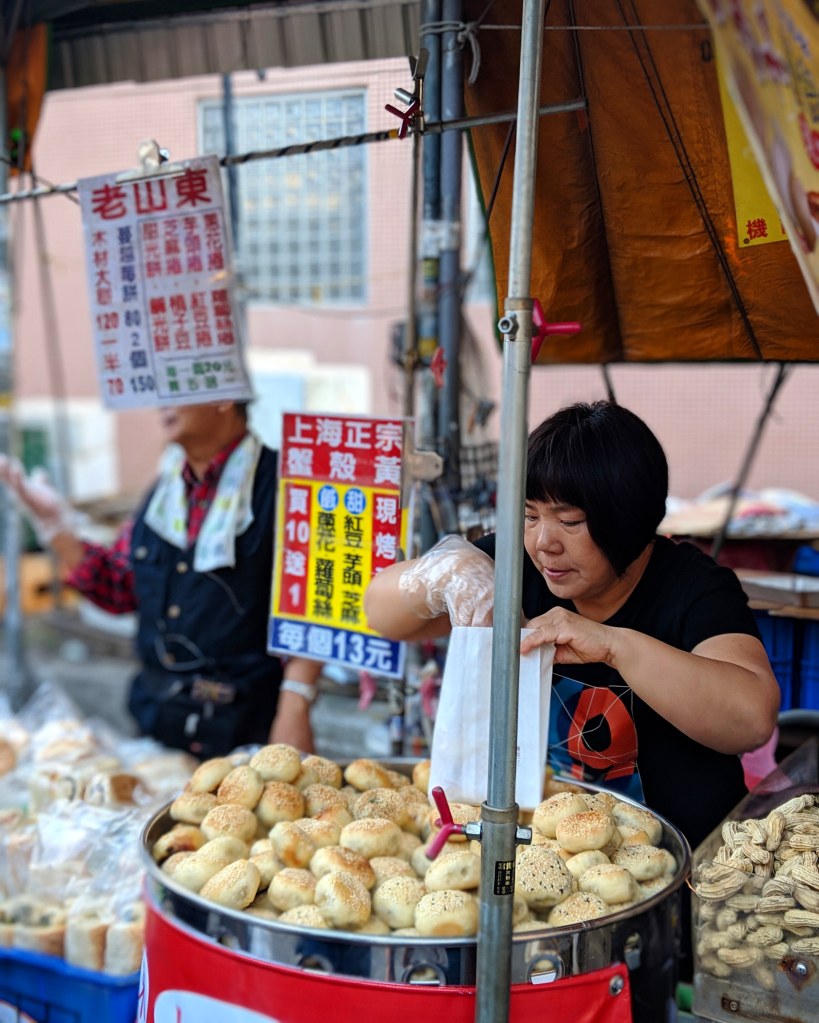
- Feng Xia Night Market
- Chun Shui Tang – Original Bubble Tea
- ShuiNan Market
- Ice Cream at Optometery
- Oyster Pancake at Taitung
- Shaved Ice – Traditional Style
- Glacier Coffee

Things to Do:
With the exception of Fantasy Storyland, I was unable to get to these other places, however, these come highly recommended from my travel companion who has lived in Taichung and visited many times.
- Fantasy Storyland
- Taichung National Art Gallery
- Explore Sun Moon Lake
- Walk the Gaomei Wetlands
- Flower Expo
Night Market Culture
Feng Xia Night Market 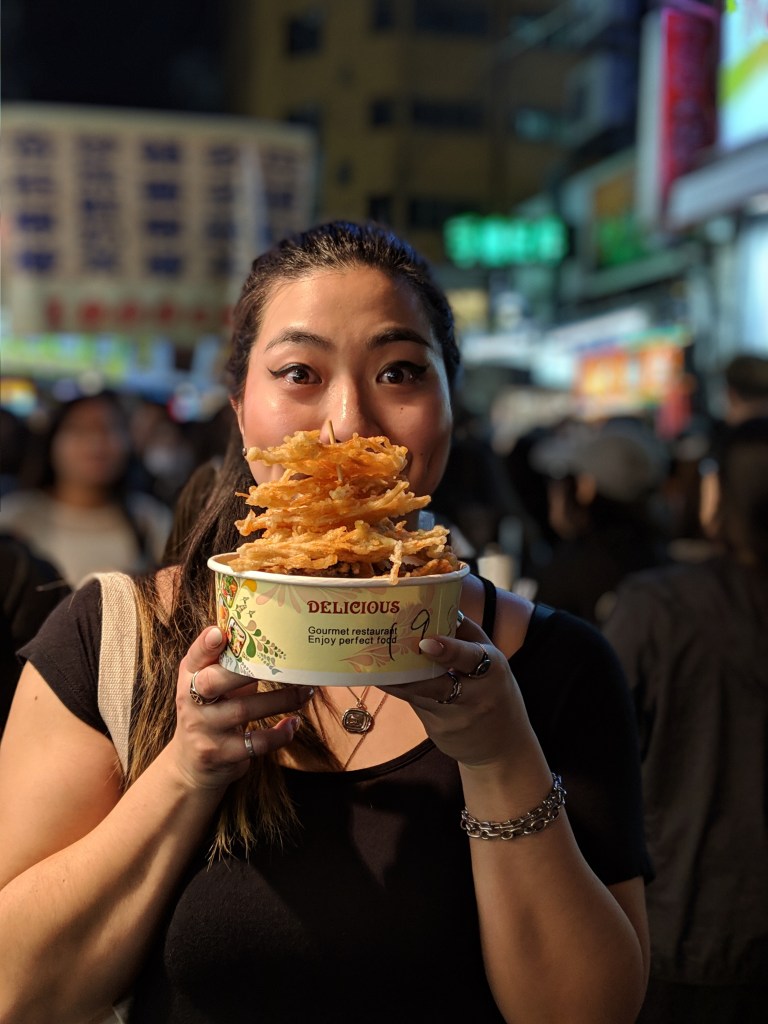
Fried Mushrooms 
Vending Machines & Shops 
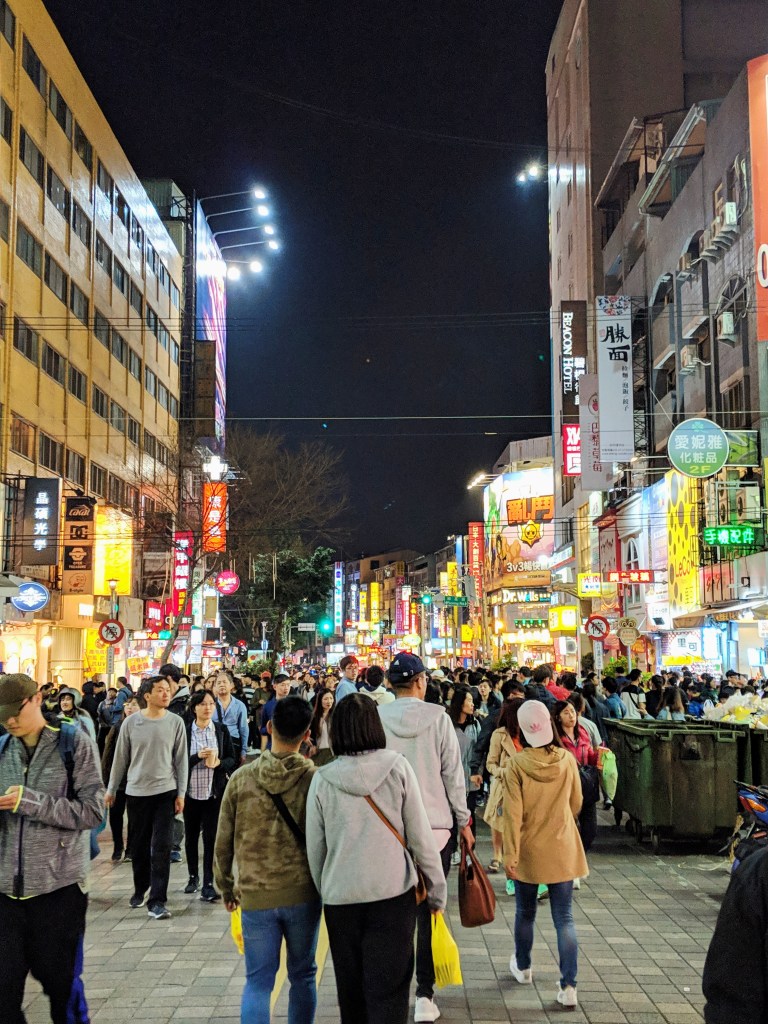
Main Entrance to Feng Xia Market Taiwan is well-known for its night market culture, and it delivered a million times over. A nightly occurrence, the night market scene starts around 8 pm but seems to hit its pinnacle around 10 pm. Crowds of people move together in unison, all looking for their next snack. The lanes are lined on either side with street vendors, there is a mix of people seeing products and food vendors. The most popular spots always have a long line, so you have to evaluate your priorities. I will say the ‘snacking culture’ suits me well. It may seem intense at first glance, eating so much fried, sugary, and salty food, but as my friend noted, it’s so hot, and you sweat so much it balances all the electrolytes you lose.
Highlights on Street Food in Taichung:
- Fried Mushrooms – Stacked High – so salty and delicious
- Bubble Tea is so refreshing after salty foods, I recommend lower sugar
- Scallion Pancakes with Egg
- Pig’s Blood Cake
A scallion pancake, my favourite. The markets blend into the surrounding environment so well, twisting and turning and creating an exciting
Bubble Tea
Taichung is the birth place of bubble tea. The origin story derives from a unique mix of circumstances that yielded one the most unexpected drinks of the time, into one of the most famous and enjoyed beverages in Taiwan and the world at large. You can read the full story here.
Things to Know About Bubble Tea:
- Types of Tea – Milk, Slushie, Fruit, or Tea
- Sugar – You will need to indicate the level of sweetness
- Ice – How much ice do you like in your BT?
- Jellies – Pearls (Tapioca), Coconut (My favourite)
Although bubble tea is ingenious and delicious, it comes with a lot of plastic waste, straws, cups, and carrier bags. The most surprising to see is the plastic carrier bag. However, a shift in perception around this type of waste, and its adverse effects on oceans and marine animals has resulted in creative energies focusing on reusable alternatives.
The result, crafty and utterly adorable cup holders (ideal for coffee too) with savvy handles to ensure a hands-free experience for whatever may come your way. When you’re in the markets, I recommend keeping an eye out for these little treasures, they are worth it for your time in Taiwan, and you may even use it when you get back home. Be a trendsetter.

Fantasy Story
Fantasy Story is a group of restored buildings, offering an off-beat mix of artists studios, restaurants, cafes, bars, and shops. Part artistic experiment and revitalization project the area has become a hot spot for locals and visitors alike. The buildings retain their original form and building materials, while temporary occupants add a contemporary aesthetic to the interiors.
Plants grow wild and add a lush and vibrant edge to the historic brick buildings. Weaving through large doorways, up staircases that share space next to an old-growth tree creates a unique and enticing vibe, drawing you deeper into the heart of the complex. A little gem I found was the Taihu Brewery, a beautifully designed and renovated space boasting an impressive beer list of their own making, other local breweries and international beers.

Wandering through Fantasy Story 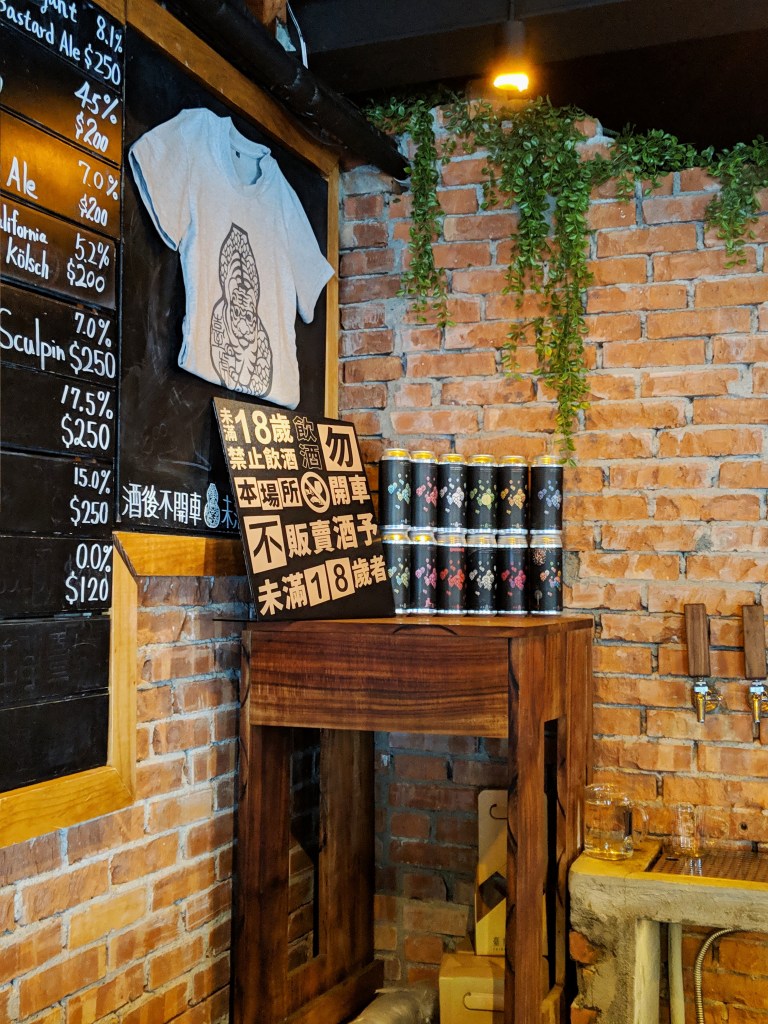
Taihu Brewery 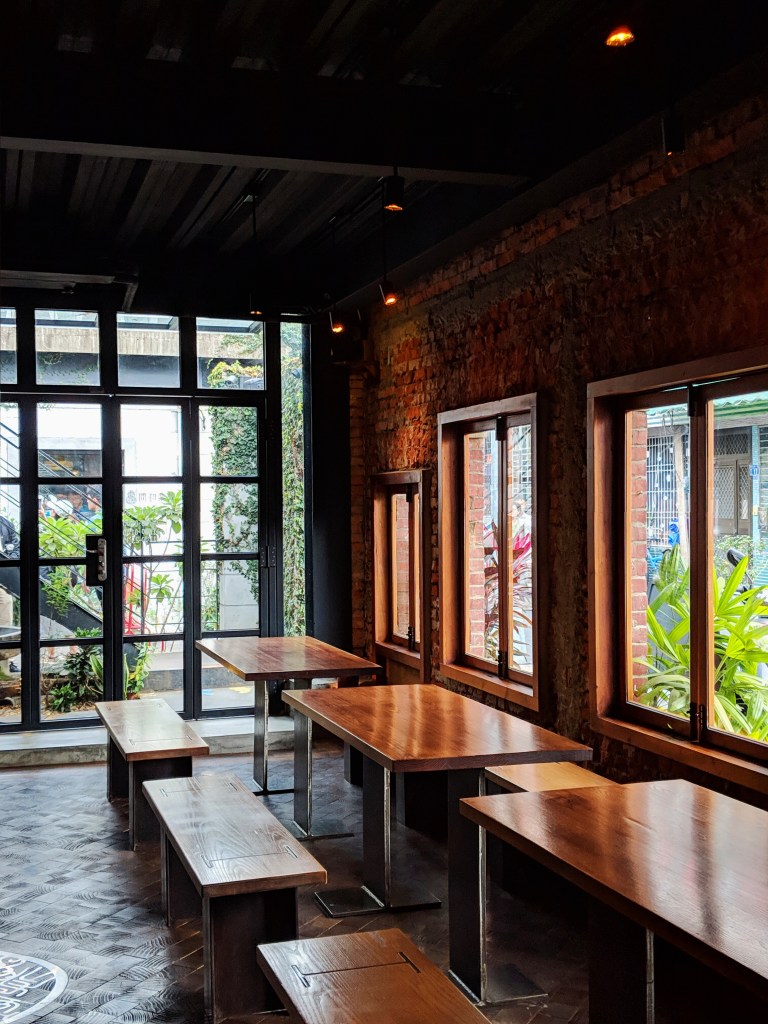
Gorgeous Seating Area in Taihu Brewery
-
Mexico City – Beautiful Chaos
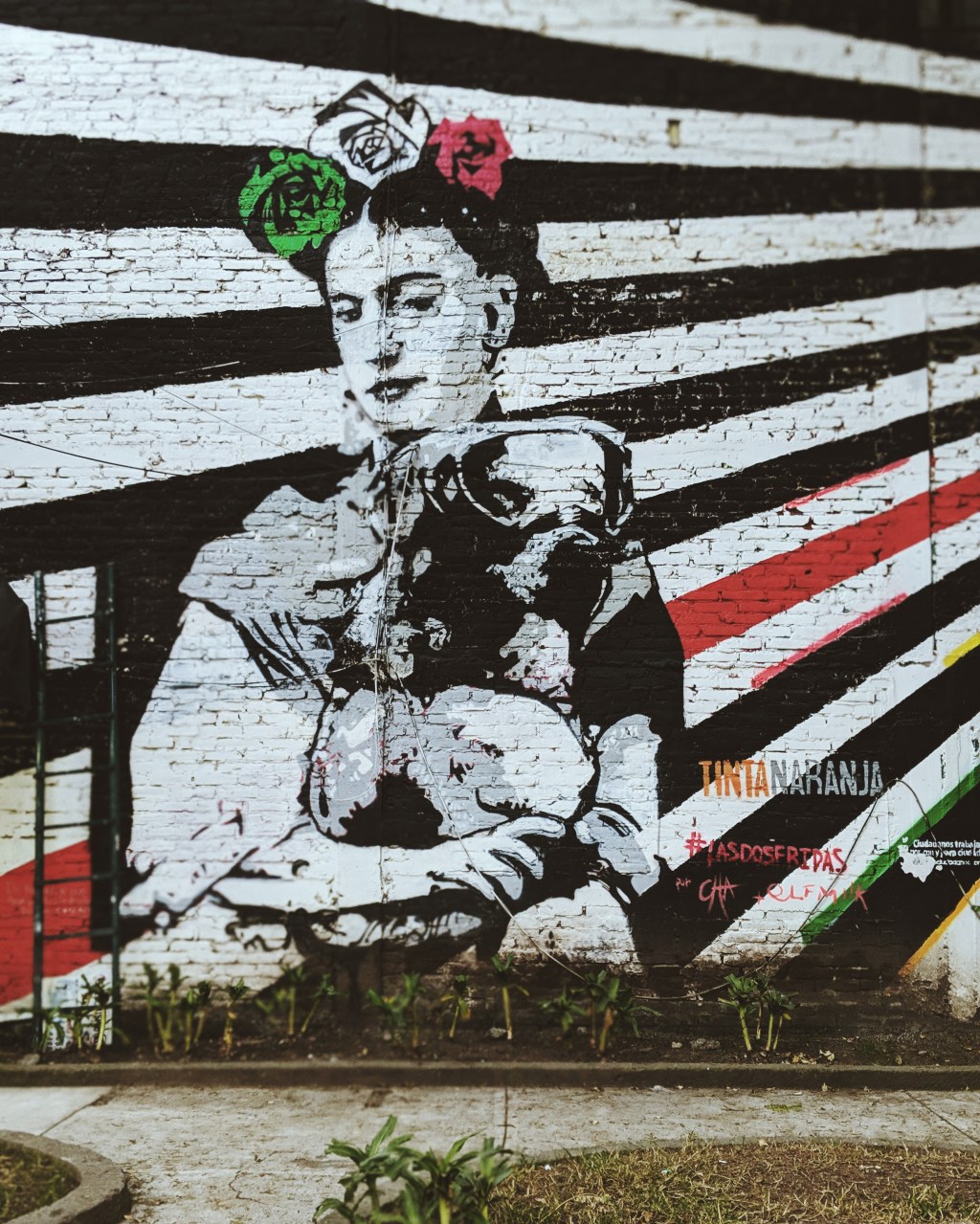
Mexico City is bursting at the seams. There is an energy in the city, a groundswell of change happening, re-shaping the city through restaurants, cafes, boutiques, and art. These shifts are placing Mexico in the spotlight on the world stage, showcasing a heightened degree of pride and ownership in its culture as it is reimagined in a contemporary setting.
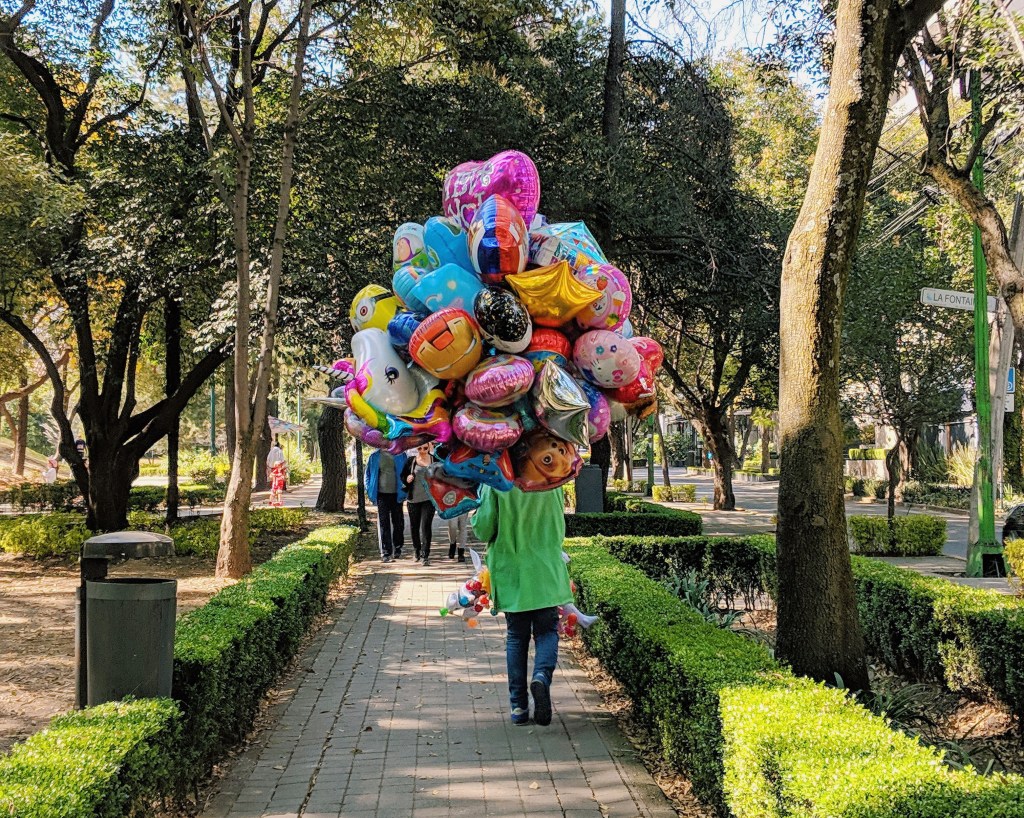
Balloon seller in Polanco The coffee culture has exploded looking inward to the rich and diverse range of varietals harvested, roasted, and served within a growing range of contemporary cafes. Although the food scene in the city is extensive and well-developed, it is being refined and refreshed for a new generation of chefs and restaurants. It’s important to know that you can eat a 20 peso taco at a street stall or a 200 peso taco, and so many other fantastic food offerings in the city.

Tacos at El Pescaditos in Centro Practical Matters
Phones
I recommend purchasing a sim card upon arrival at the airport. There are cell phone shops in the airport (second floor) that you can get a sim card for ~250 pesos, the attendant will be able to set up everything for you but note that they may not speak English. Or, your service provider should offer a travel bundle while out of the country.
Transportation
Ride Share is widely available in the city; you can take: Uber, Lyft, or Didi. I used Uber the entire time I was there; it is very reasonably priced and an excellent way to get around. Language abilities ranges, I had full conversations in English and mixed conversations in Spanglish, while others do not speak English, so you have to feel confident in your Spanish to engage past pleasantries.
CDMX Taxis are widely available throughout the city, they are pink and white and have certifications in the windows. If you take one, which is safe, confirm the price before you get in and ensure that there is proper certification. An overhaul on the city’s taxis has meant that the verified taxis should not try and over-charge.
Metro if you want to take cheap transport this is a great way to get around with stops in most of the major areas of the city. If you take the Metro to keep your wits about you, it’s a new place and new system so it may take a few rides to get the lay of the land, but it’s quick, convenient, and clean.
Walking is possible to most places within the city, be prepared to walk 20-30min roughly but it’s a great way to see the city and get into the side streets. Often if I want to maximize time, I will take an Uber to a specific location and then walk home from there.
Money Matters
Pesosgo a long way, especially if you intend to stop at smaller cantinas, restaurants, or markets where some only take cash. It is also good if you take taxis. USD is accepted, but always use pesos if you are in Mexico. Credit cards are accepted in most places; it will be indicated in the shop windows.
Accommodation
Air BnB is the most ubiquitous option, it is what I used and loved it. My favourite neighbourhoods are Colonial Roma, La Condesa, or Colonial Juarez. The options range, from high end to cheap and cheerful. It really depends on what you want out of your stay.
Hotels are available as well, there is a range of lower-end to high-end options. Some of the mid-to-high ends are great if you’re staying a couple of days and want to treat yourself.
Resources
Here are some links to guidebooks and websites that I used while planning my trip.
- Monocle City Guides
- Wallpaper City Guides
- Local.MX City Guide
- Drift Magazine – Everything Coffee
- Chilango.com
Itineraries by Neighbourhood & Theme
- Colonial Roma
- Coyoacán
- Centro Historico
- Museums
- Luis Barragán
- Coffee Culture (Coming soon)
-
Mexico City – Museums

You could spend your entire time in Mexico City just focused on museums, galleries, and cultural institutions. There is an incredible offering for a variety of tastes. I’ll be highlighting the ones that I went to as well as the ones I wanted to go to but didn’t have the time. It’s worth noting that the museums in Polanco are surrounded by Chapultepec Park, which is worth exploring. You can also buy souvenirs and food at the many vendors outside the museums and throughout the park.
Exit through the gift shop. Exit through the gift shop. We all know this game, but I was impressed with a number of the gifts shops that offered a well-curated selection of artisanal and locally made products, such as homewares, books, jewellery, ceramics, apparel, and accessories. This is worth mentioning because so many gift shops are full of poorly made, overly priced products that are thrown away. I am a proponent of buying things that remind me of my trip and bring me joy when I use them back home. I was happy to see some of the shops focused on quality goods over cheap and over-priced knock-offs.
Practical Matters:
- Avoid going on holidays, if you can. If you can’t, get there early to avoid the lines.
- Most museums are closed on Mondays, so plan accordingly.
- Bring cash; pesos are always best.
- Check the times; some museums are open late, so I recommend staggering your visits to avoid crowds.
- Group museums by neighbourhood.
Neighbourhoods
Polanco
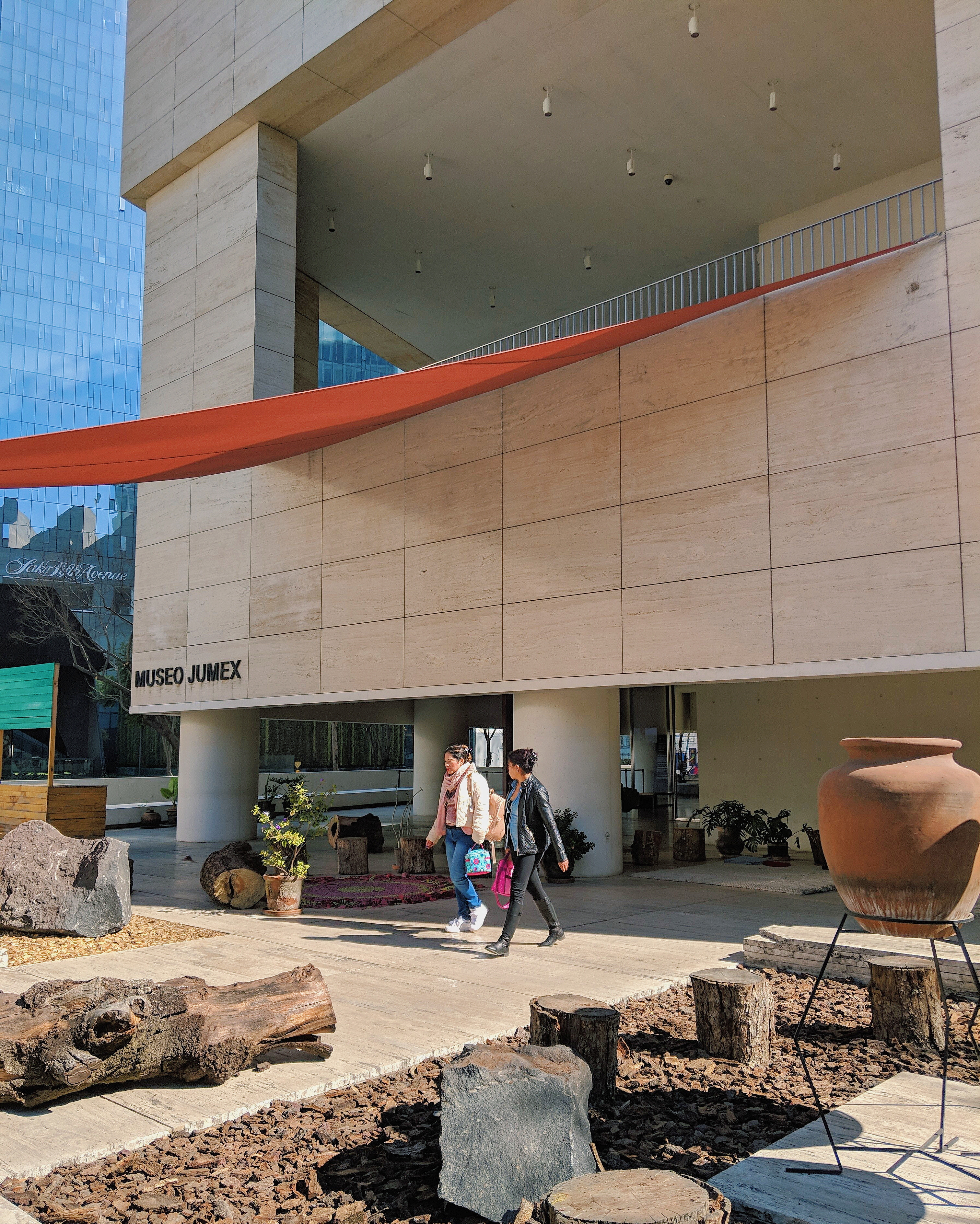
Museo Jumex 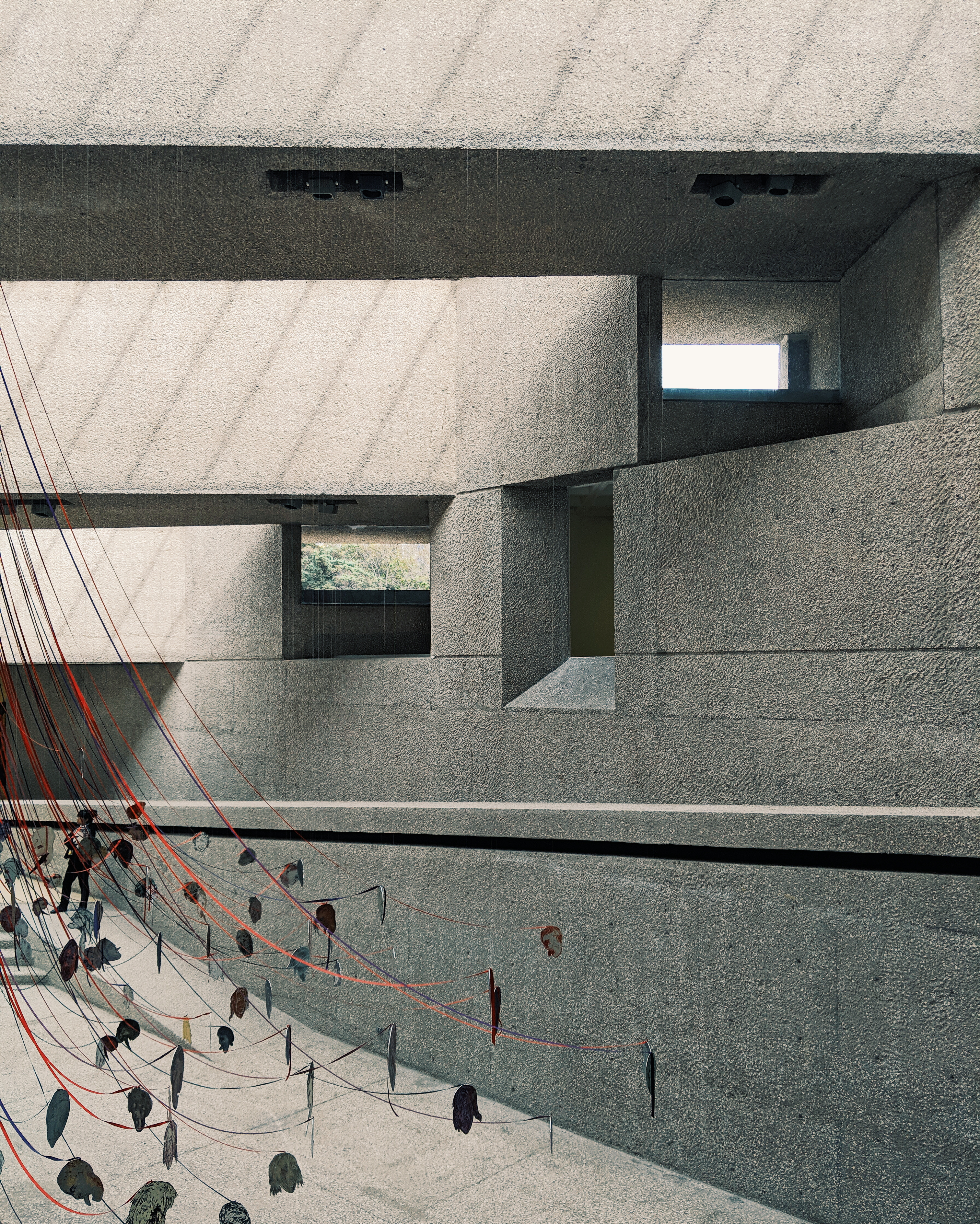
Museo Tamayo 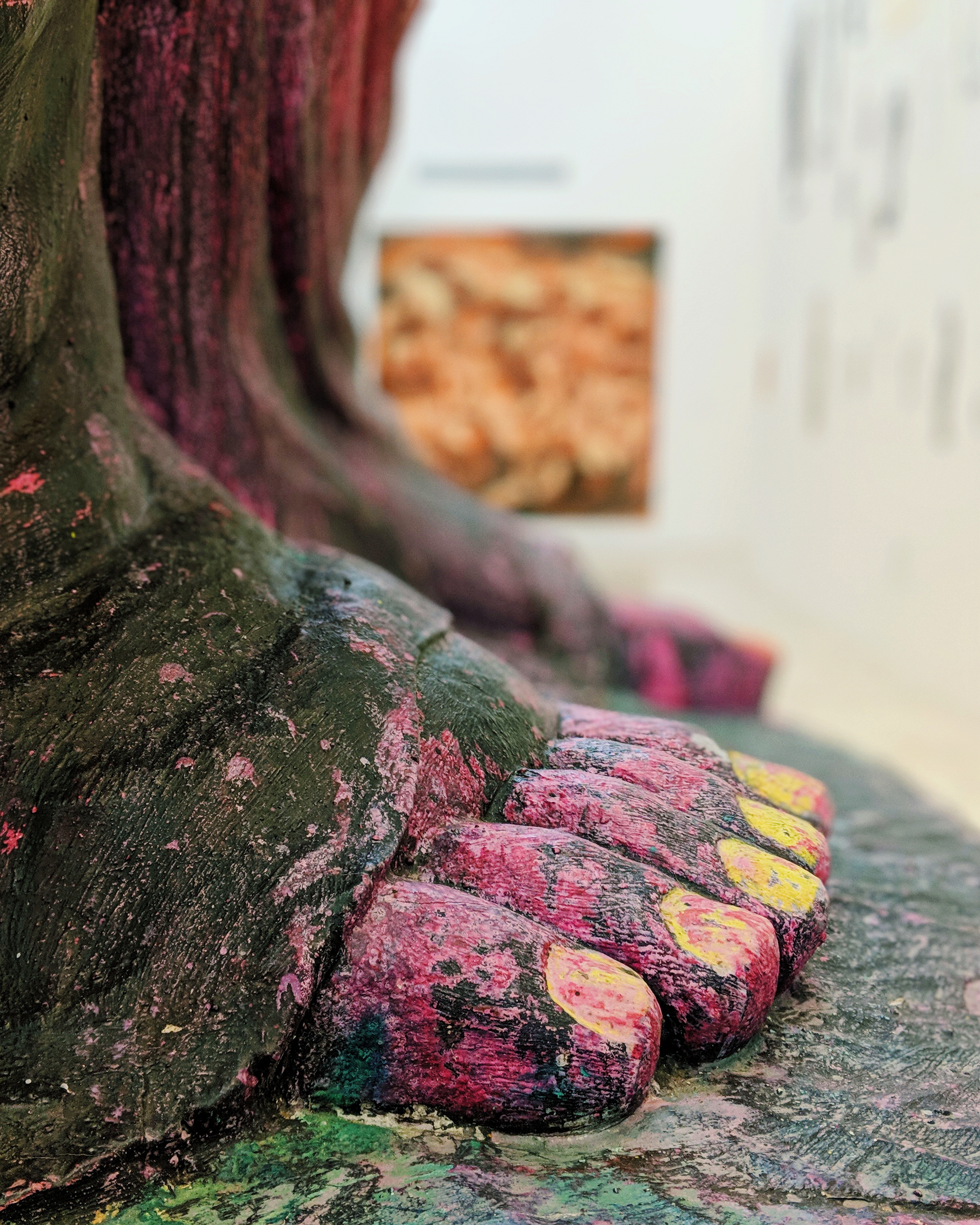
Buddha’s Feet in Museo Tamayo
Museum of Anthropology – This is an entire day affair; it is a beautiful museum with a well-organized timeline of artifacts spanning thousands of years. Get there when it opens and bring cash (pesos). When you get tired take a break in the cafe, they have a beautiful courtyard with a delicious menu to refuel for the rest of the day.
Museum Tamayo – Built for the Mexican artist Rufino Tamayo in the 1980s, this is a stunning modernist building. The architecture is beautiful inside and out. It is a quieter museum, but worth the time to go through and experience the space. The exhibits focus on Mexican and international contemporary artists. Stop at this gift shop for a great selection of books (architecture, design, and cities) and locally made products. Lastly, the patio and restaurant are a hidden gem, enjoy the terrace with some wine and sun.
Museo Jumex – Is one of my favourite museums because of the contemporary and off-beat exhibits they have. There is an effort to focus on Mexican art along with other Latin American artists, which I appreciate. The architecture is also worth-seeing, take your time to walk through the building inside/outside. Pit-stop at the gift shop for a great selection of books, both Spanish and English, and then refuel at cafe Eno.
Other Notables
Museo de Arte Moderno & Museo Soumaya
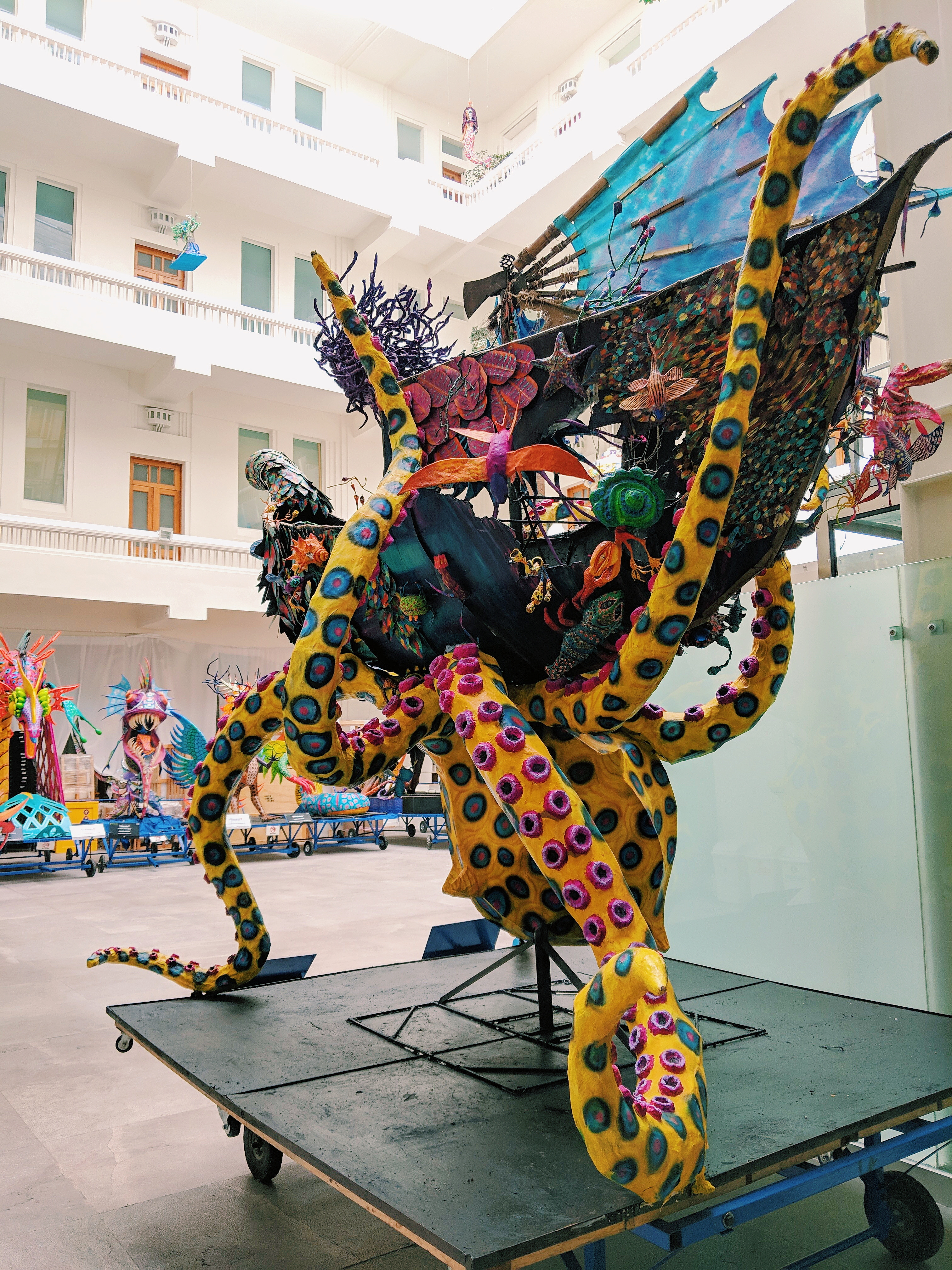
Museo de Arte Popular 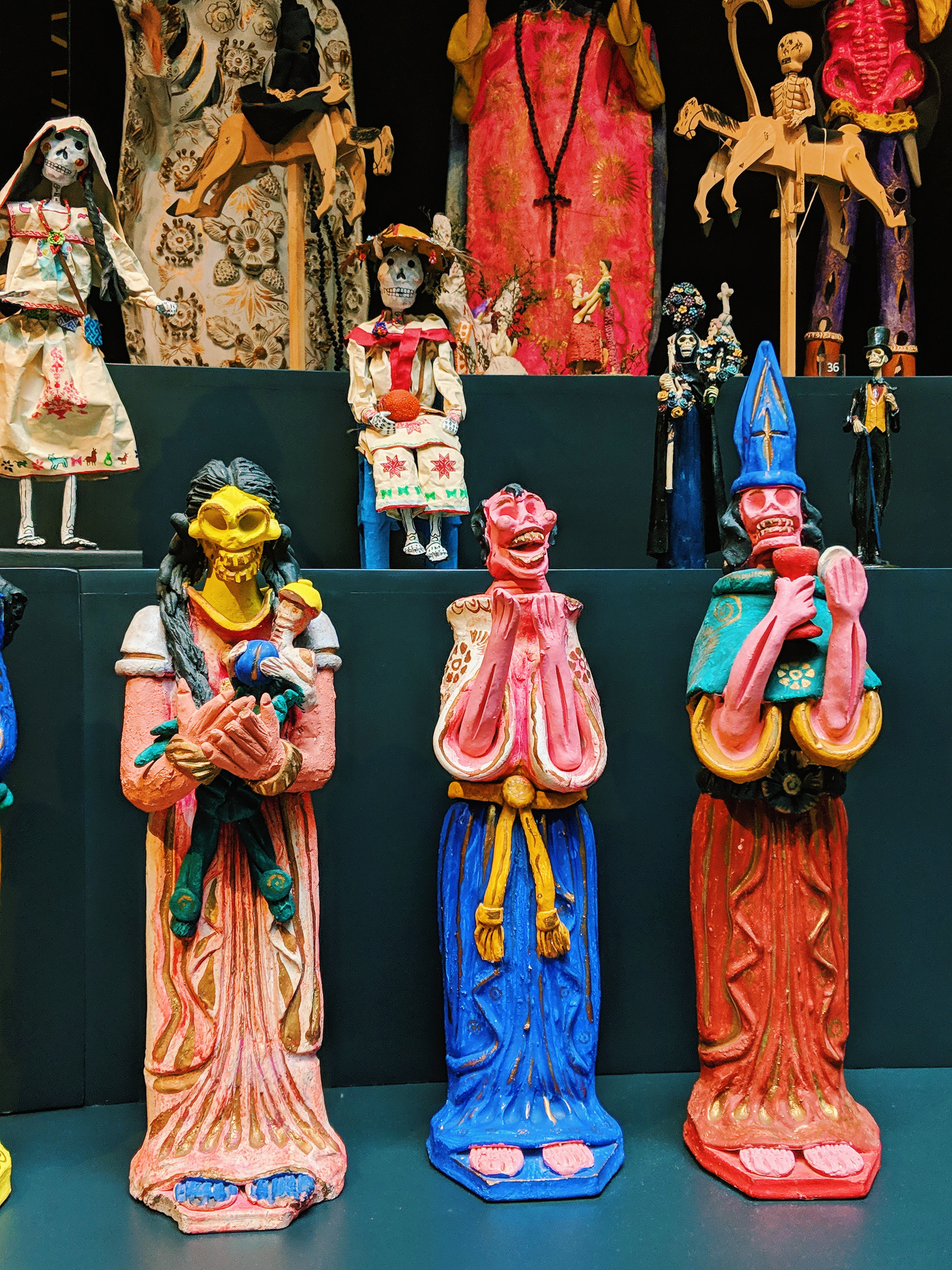
Day of the Dead Figurines, Museo de Arte Popular 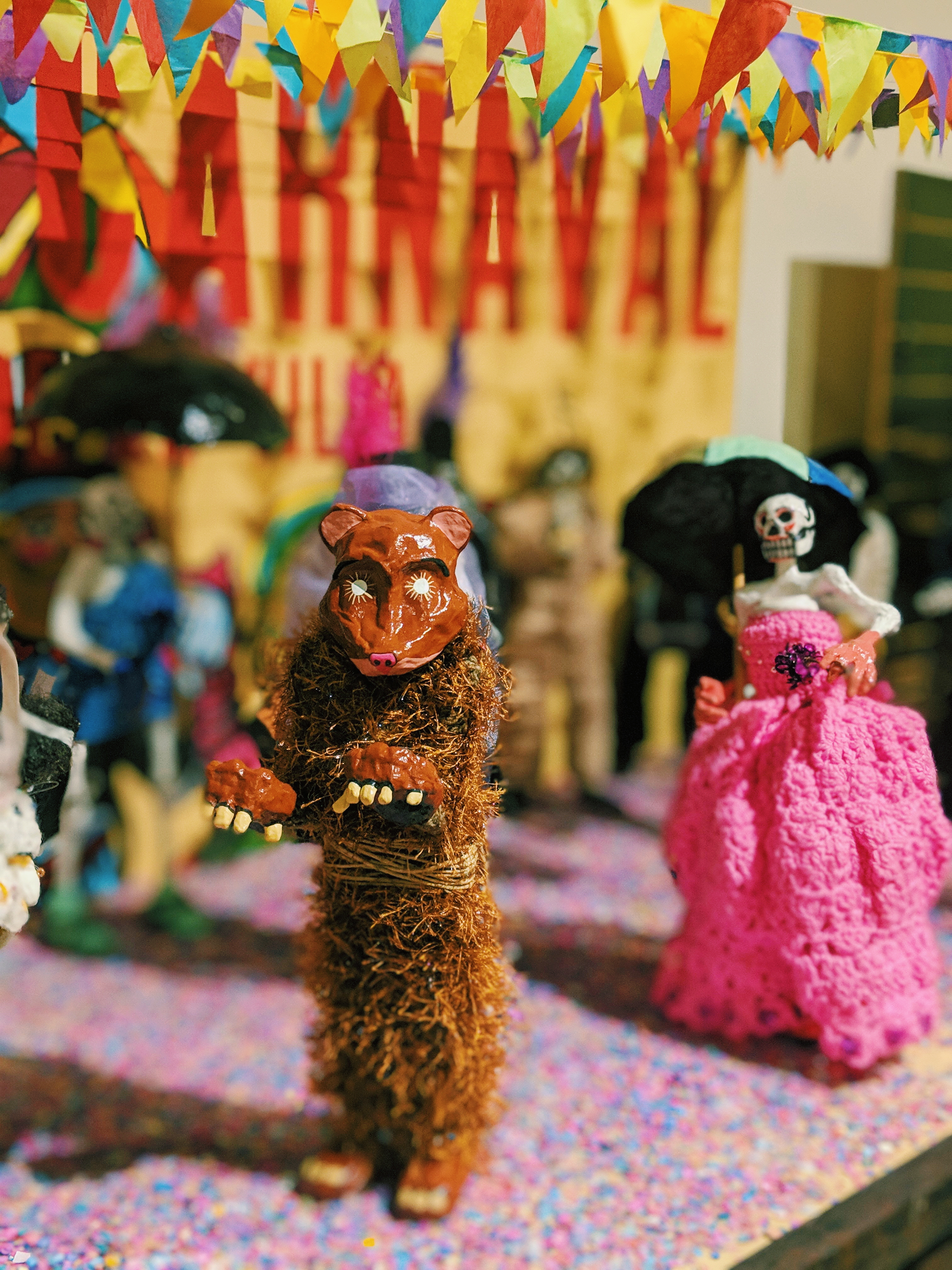
Diorama, Museo de Arte Popular 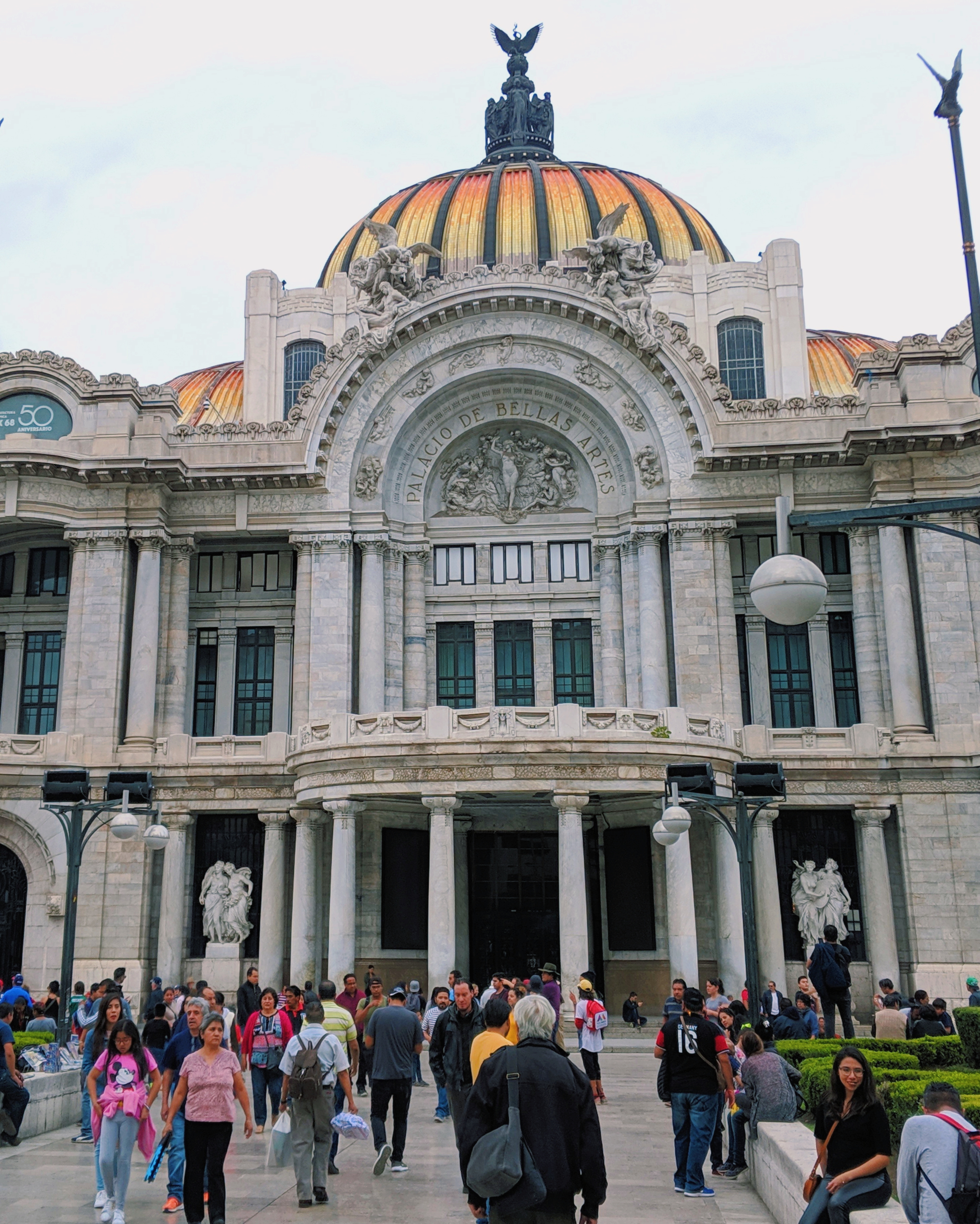
Palacio Belle Artes 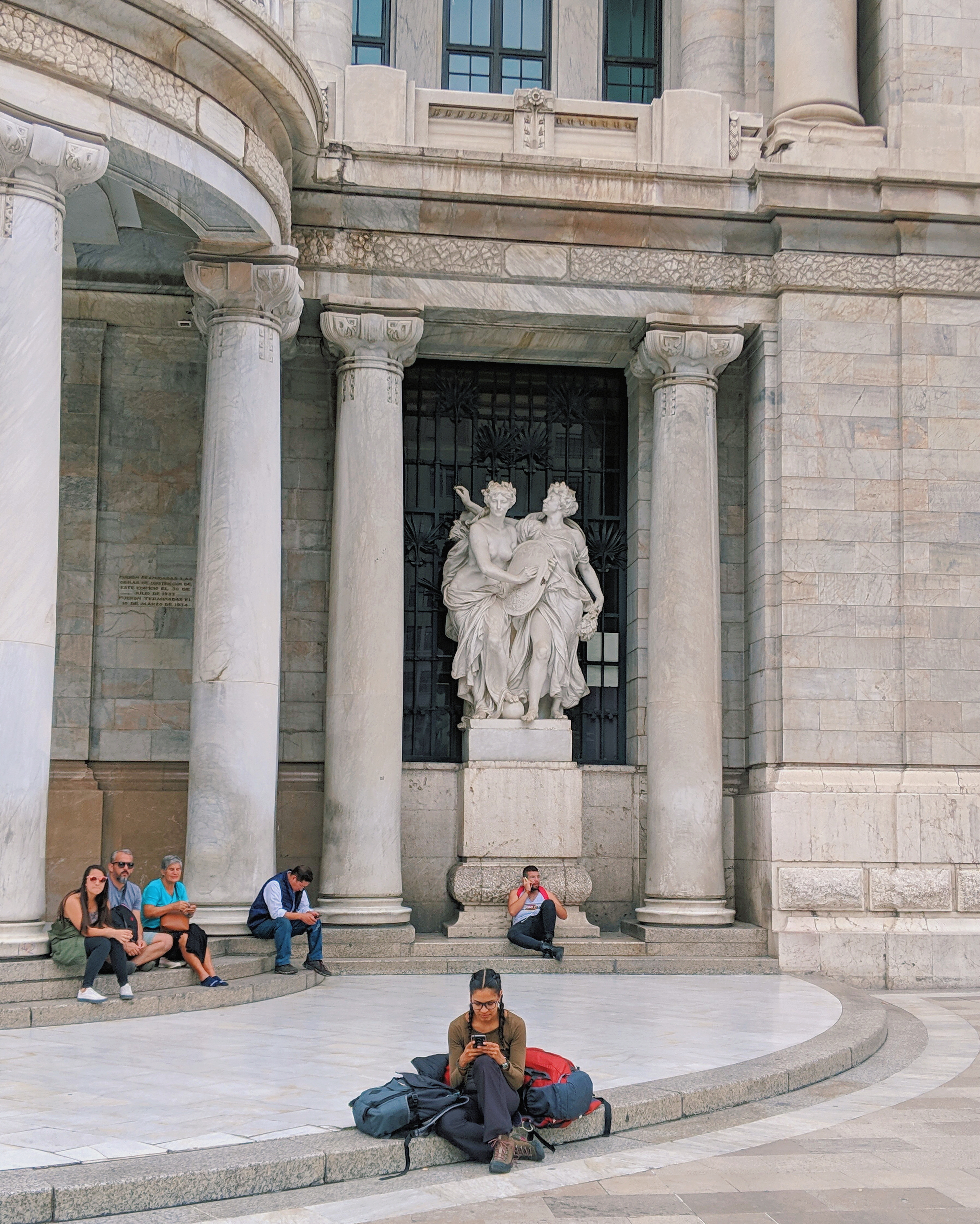
Palacio Belle Artes 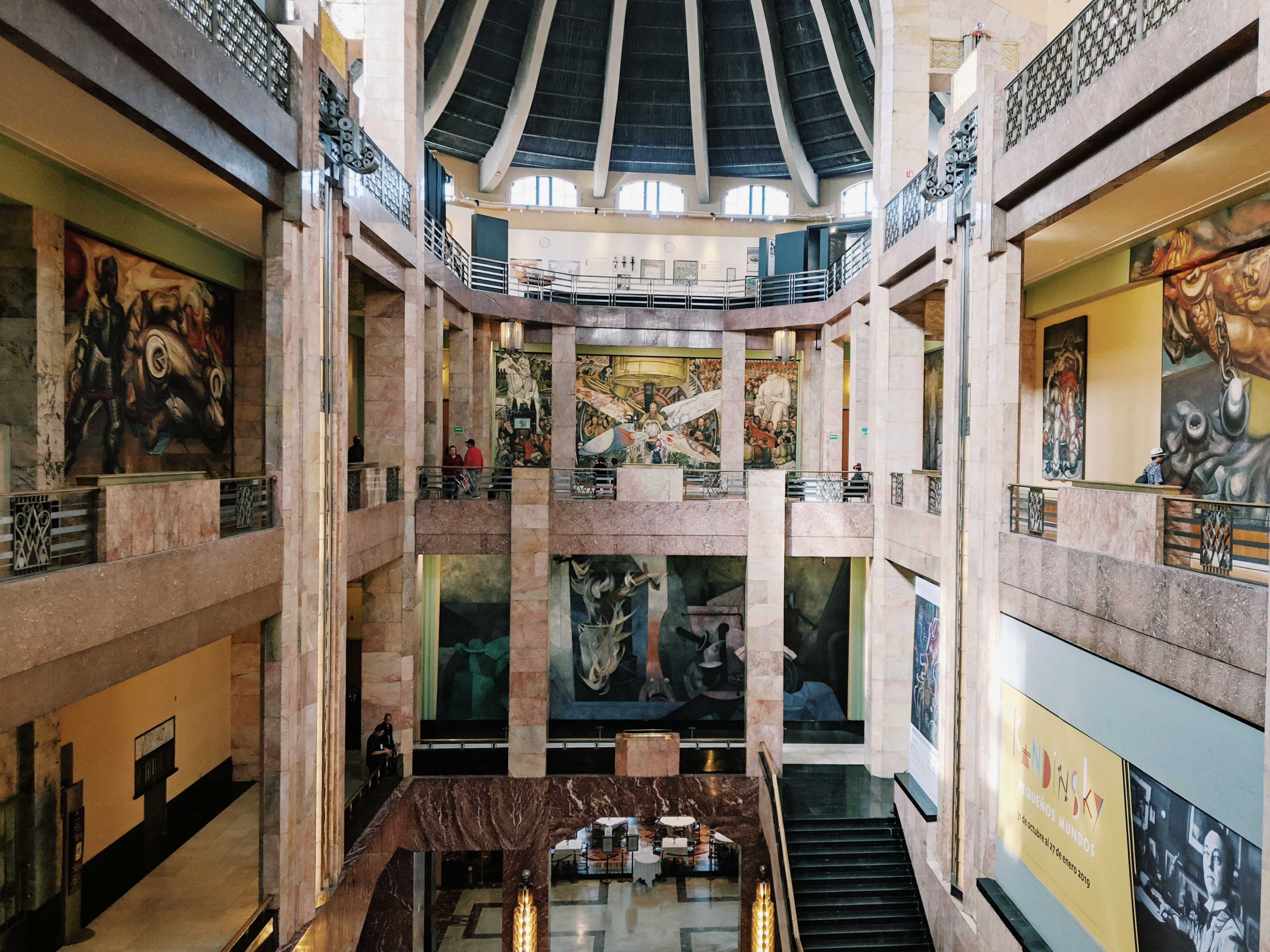
Inside Palacio Belle Artes 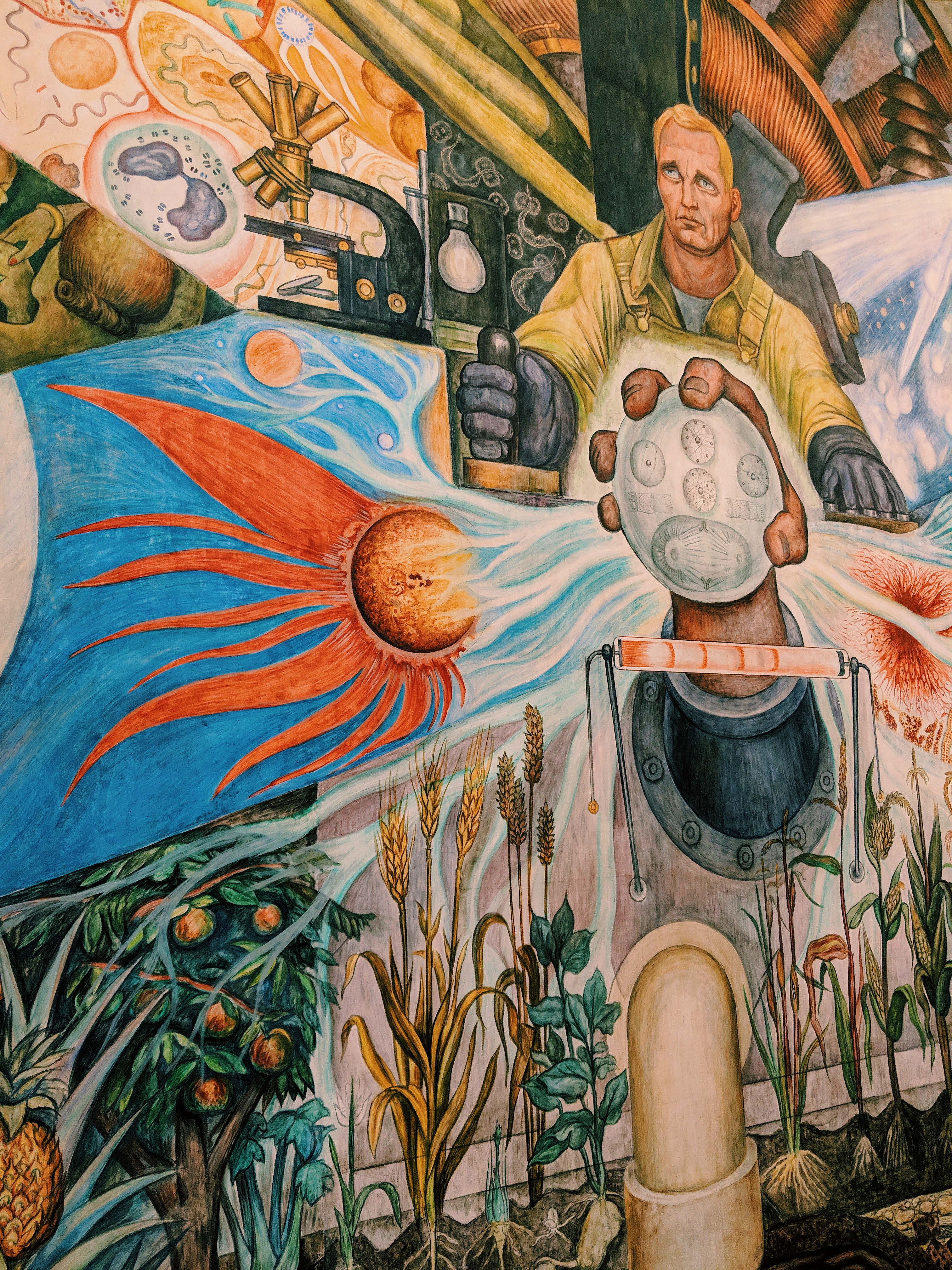
Diego Rivera Mural, Palacio Belle Arte
Centro
Museum of Popular Art – This is one of my favourite museums. It is airy and whimsical, but it does an incredible job of going over the different types of popular art found in Mexico clearly explaining the links between the objects and the daily lives of Mexicans. When you see items for sale on the streets or in markets they suddenly have meaning and depth, making them even more valuable. If you want to buy souvenirs avoid the gift shop, instead head over to Mercado Ciudadela for a more authentic market experience, without the marked up prices. After your tour through the museum you may be hungry, so walk up to El Pascadito’s for some tacos.
Palacio Belle Artes is a cultural institution housing permanent and temporary art and design exhibitions, concerts, and beautiful architecture. The current exhibit is a Kandinsky Retrospective, showcasing the artist’s evolution over time. Even if you don’t go inside the exterior is worth the visit alone, along with the adjacent plaza. Get there early to avoid the lines and bring cash.
Other Notables
Diego Riveria Mural Museum, Museo de la Ciudad de Mexico, Museo de Nacional de Arte and Museo de Templo Major.
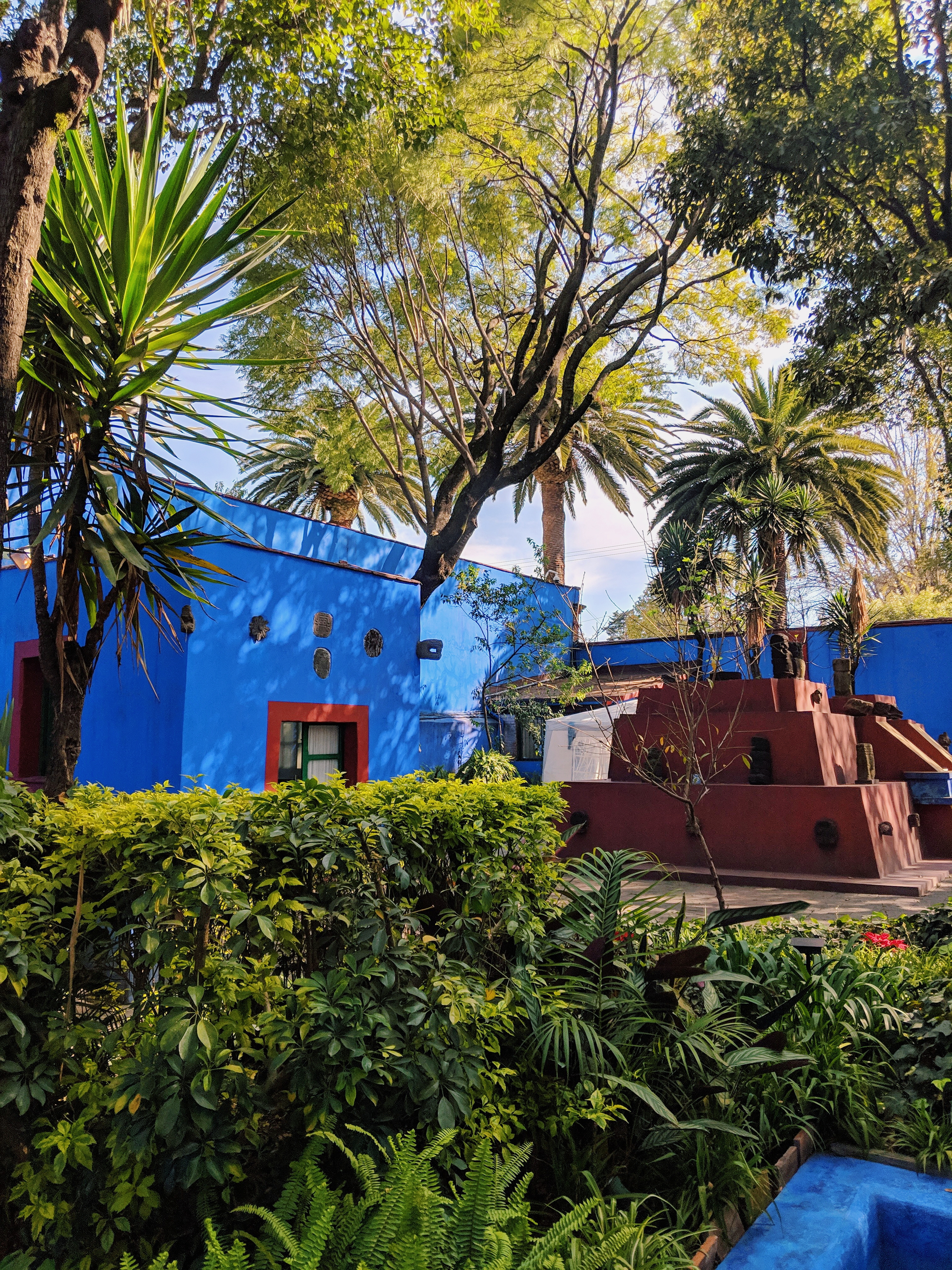
Courtyard in Museo Frida Kahlo 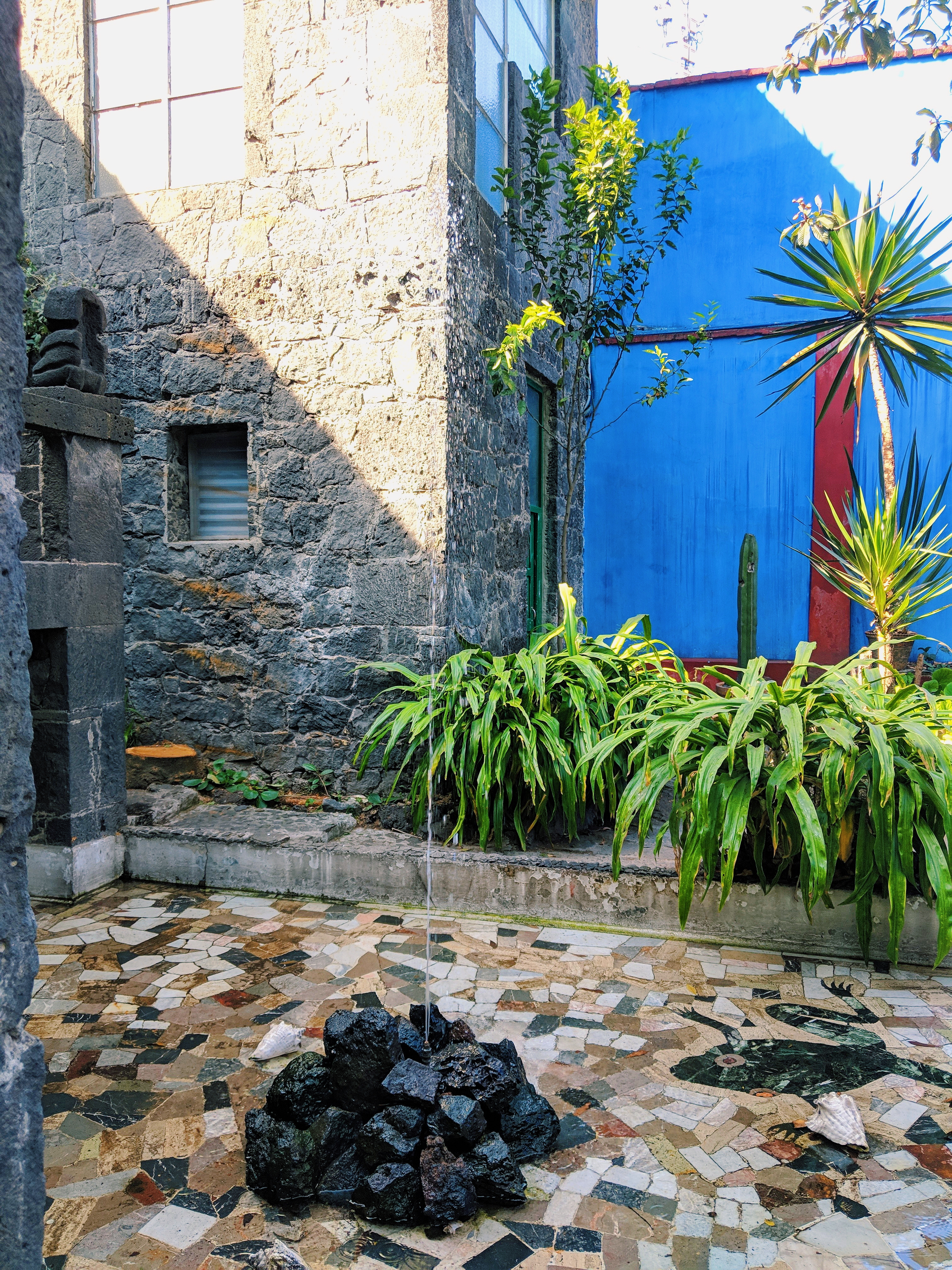
Fountain in Museo Frida Kahlo 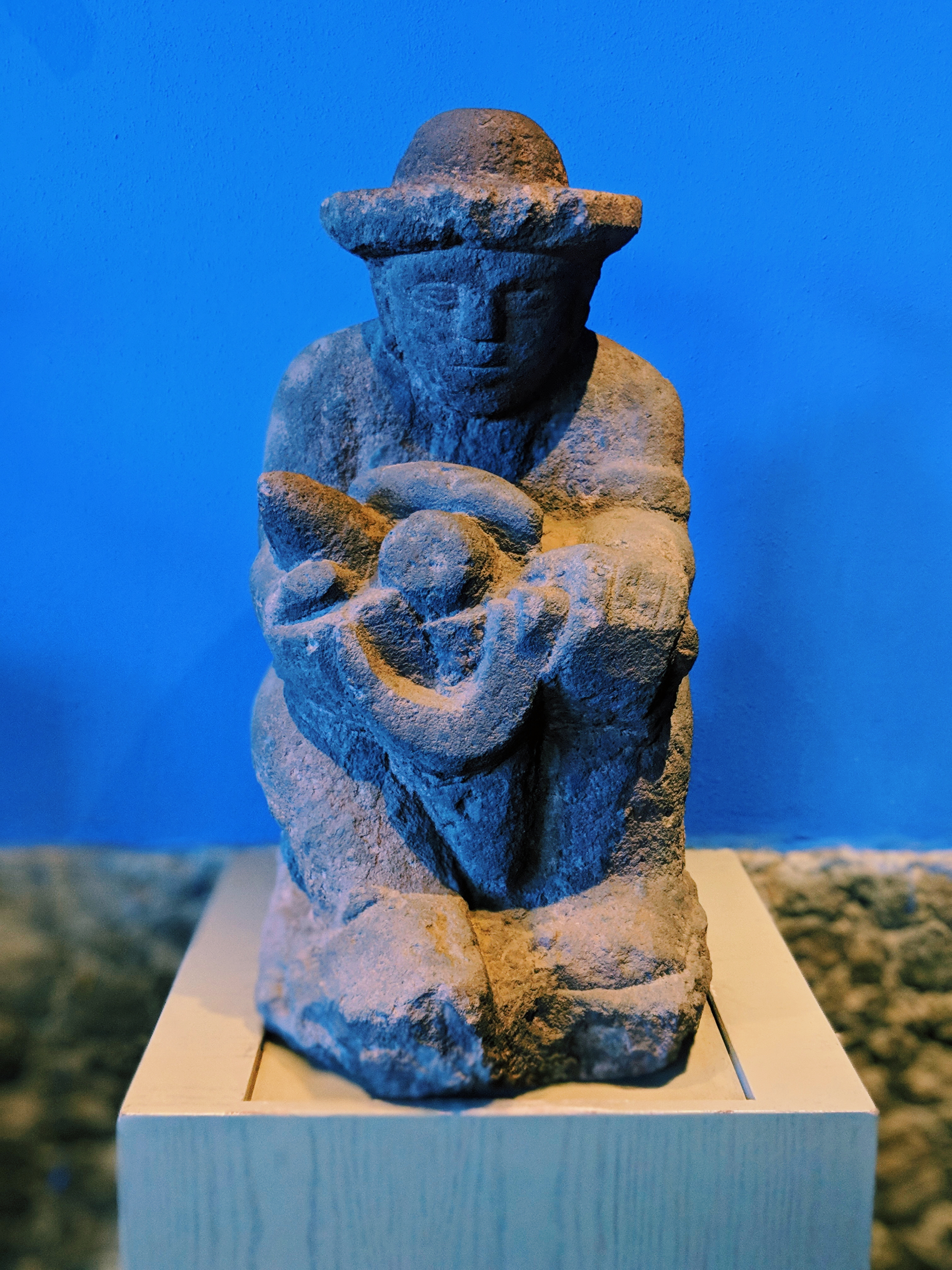
Sculpture Garden in Museo Frida Kahlo
Coyoacan
Museo Frida Kahlo “Blue House”. Although I love Frida Kahlo and her art, I felt that her house was a bit overrated. It felt overwhelmingly busy and challenging to navigate through. The space I liked the most was outside in the courtyard, surrounded by trees and plants providing respite from the mid-day heat. I think you should go and see it for yourself, but be prepared for a place that feels too commercialized and far from what the artist would have wanted.


About Me
I always start my trips at a cafe, well known for it’s filter coffee or flat whites, followed up with a quick chat with the baristas on their favourite spots in the city. And getting lost in the sidestreets has always yielded the most interesting things.
Follow Me On
Subscribe To My Newsletter
Subscribe for new travel stories and exclusive content.
 Sidestreet Travel